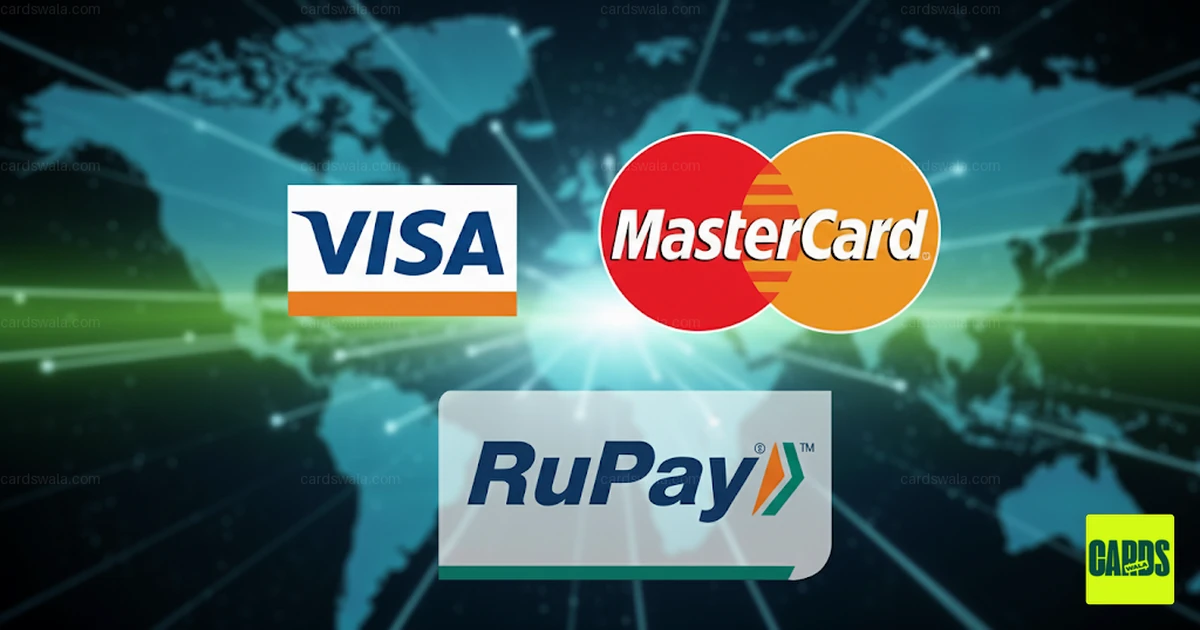
Visa, Mastercard, RuPay: What Are Credit Card Networks and How Do They Work?
Ever been at a cafe, tapped your credit card, and gotten that satisfying "Approved" beep in a couple of seconds? It feels like magic, but it’s actually a complex, high-speed process powered by an unsung hero of the financial world: the credit card network.
You've seen their logos a million times. Visa, Mastercard, American Express, Discover, and in India, the increasingly popular RuPay. But what do they actually do? Let's break it down.
What is a Credit Card Network, Anyway?
Think of a credit card network as the financial superhighway that connects everyone involved in your purchase. It’s the essential link between:
- Your bank (the one that issued you the card).
- The merchant's bank (the one that receives the payment).
Without these networks, your card would just be a piece of plastic. They build and manage the entire infrastructure that allows money and information to move securely and instantly across the globe.
The 5-Second Journey: How a Transaction Works
When you make a purchase, the network springs into action. Here’s a simplified look at that near-instantaneous journey:
- You Pay: You swipe, dip, or tap your card. The merchant's terminal captures your card details.
- The Request: The terminal sends the transaction details to the merchant's bank, which then forwards them to your card's network (e.g., Visa).
- The Check-Up: The network instantly routes the request to your bank (e.g., HDFC or SBI). Your bank checks if you have enough credit and if the transaction looks legitimate (not fraudulent).
- The Response: Your bank sends an "approved" or "declined" message back to the network.
- The Final Word: The network forwards this response to the merchant's terminal, and your transaction is complete!
All of this happens in less time than it takes to read this sentence. Later, the network facilitates the actual money transfer between the banks, ensuring the merchant gets paid.
The Most Common Mix-Up: Network vs. Issuer
This is where most people get confused. The network (Visa) and the issuer (your bank) are two different entities.
| Credit Card Issuer (Your Bank) | Credit Card Network (The Highway) |
|---|---|
| ✅ Approves your card application. | ➡️ Manages the technology for transactions. |
| ✅ Sets your credit limit, interest rates (APR), and fees. | ➡️ Connects your bank to the merchant's bank. |
| ✅ Sends your monthly bills and collects payments. | ➡️ Sets the rules for security and processing. |
| ✅ Provides your rewards (cash back, points, miles). | ➡️ Ensures global acceptance of the card. |
| Examples: HDFC Bank, SBI Cards, ICICI Bank, Citibank | Examples: Visa, Mastercard, American Express, Discover, RuPay |
The Exception: Companies like American Express and Discover are unique because they act as both the issuer and the network. This is why their branding is often more prominent on the card itself.
Meet the Major Players
- Visa & Mastercard: The two giants. They don't issue cards themselves but partner with thousands of banks globally. Their biggest advantage is near-universal acceptance.
- American Express (Amex): Often associated with premium cards, travel perks, and excellent customer service. Since they manage the whole process, they have more control over benefits.
- Discover: Popular in the US, known for its strong cash-back programs and customer-friendly policies.
- RuPay: India's own domestic card network. Launched by the National Payments Corporation of India (NPCI), it has rapidly grown in popularity due to its focus on the Indian market and lower processing fees for merchants.
Why Should You Care? The Perks of the Network
The network your card runs on directly impacts you in a few key ways:
- Acceptance: A Visa or Mastercard will be accepted almost everywhere, while Amex or Discover might have slightly less coverage, especially at smaller international businesses.
- Security: Networks are at the forefront of fighting fraud. They develop the technology behind chip cards, tokenization (which protects your real card number online), and AI-powered fraud monitoring.
- Built-in Benefits: Networks often provide a base layer of perks like rental car insurance, extended warranties, or travel protection, which your bank might then build upon with its own rewards.
RuPay Tiers: Classic vs Platinum vs Select (and Cards Like Divaa)
RuPay isn't one flat product — it has tiers, and your card's tier decides lounge and concierge extras:
- RuPay Classic: entry-level, basic rewards, fuel surcharge waiver.
- RuPay Platinum: mid-tier with better reward rates and occasional lounge offers (rules went spend-based in 2026 — check your bank's threshold).
- RuPay Select: premium tier with concierge, lounge access, and higher reward rates — this is where cards like Union Bank's Divaa (a women-focused RuPay Platinum/Select offering) draw their lifestyle perks from.
Two cards from different banks on the same RuPay tier share the network-level benefits; everything else (reward rate, fees, lounge count) is the issuer's call. Always check both layers.
Frequently Asked Questions (FAQ)
1. Is Visa better than Mastercard? Honestly, for the average consumer, there's very little difference. Both offer world-class security and are accepted almost everywhere. The choice between them rarely matters as much as the rewards, fees, and interest rates offered by the issuing bank.
2. Why isn't my American Express card accepted everywhere? Amex typically charges merchants slightly higher processing fees than Visa or Mastercard. While many large retailers accept it, some smaller businesses choose not to, to save on costs.
3. What is RuPay and how is it different? RuPay is India's domestic card network designed to compete with international players. Its transactions are processed within India, leading to lower costs for Indian merchants and banks.
The Takeaway
So, the next time you tap to pay, give a little nod to the powerful network humming silently in the background. They are the invisible architects of modern commerce, making our financial lives faster, more convenient, and more secure.
Got more questions about how your cards work? Drop them in the comments below!
New wallet on the block: Apple Pay launches in India with Axis Bank cards.
Check Out These Cards

CardsWala Crew
Credit Card Expert & Financial Writer