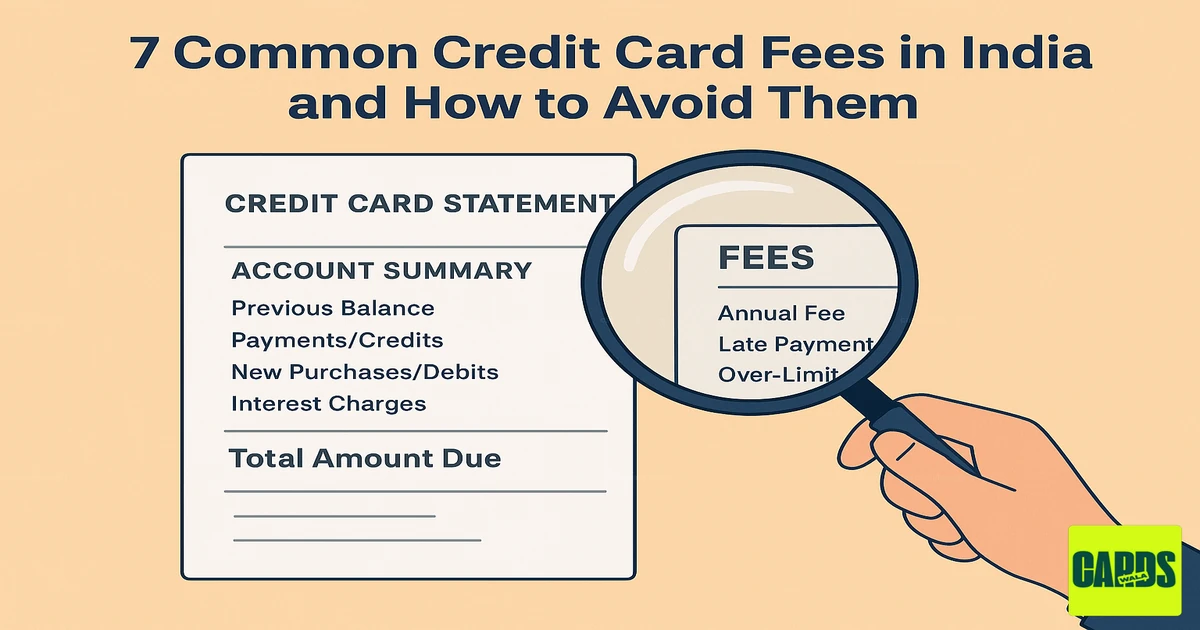
7 Common Credit Card Fees in India and How to Avoid Them
Credit cards, when used wisely, can be incredibly powerful financial tools, offering convenience, rewards, and a pathway to building a strong credit history. However, for many first-time users or those not paying close attention, hidden fees can quickly turn this convenience into a costly mistake.
In India, understanding the fine print is crucial. Banks are notorious for a myriad of charges that, if ignored, can add up significantly. But don't worry! This guide is designed for you, the smart Indian consumer, to demystify these common credit card fees and arm you with actionable strategies to avoid them. Let's ensure your credit card serves you, not the other way around.
Decoding Credit Card Fees: Your Shield Against Hidden Costs
Becoming an informed credit card user means knowing what charges to look out for. Here are 7 common fees you might encounter and how to sidestep them like a pro.
1. Annual Fee
What it is: This is a yearly charge levied by the bank for the privilege of owning and using their credit card. It's essentially a membership fee. The amount varies widely, from a few hundred rupees to several thousands, depending on the card's features and benefits.
How to avoid it:
- Go Lifetime Free (LTF): Many banks offer "Lifetime Free" cards, especially during promotional periods. These cards typically have no annual fees ever.
- Conditional Waivers: A large number of cards come with a conditional annual fee waiver. This means if you spend a certain amount within a year (e.g., ₹1 Lakh, ₹2 Lakhs), the annual fee for the next year is waived.
- Negotiate with Your Bank: If you're a loyal customer with a good payment history and have other products with the bank, you can often call customer service and request a waiver. Banks would rather keep a good customer than lose them over an annual fee.
- Downgrade or Cancel: If a card's benefits no longer justify its annual fee, consider downgrading to an LTF card offered by the same bank or cancelling it altogether (after redeeming all your rewards, of course!).
2. Late Payment Fee
What it is: This fee is charged when you fail to pay at least the "Minimum Amount Due" by the payment due date. Beyond the fee, missing a payment also attracts interest charges (on your entire outstanding balance, not just the minimum due) and can negatively impact your credit score.
How to avoid it:
- Set Up Auto-Pay: This is your best friend! Set up an auto-debit facility from your savings account for either the "Total Amount Due" or at least the "Minimum Amount Due." This ensures you never miss a payment.
- Calendar Reminders: Mark your payment due dates on your digital calendar (Google Calendar, phone reminders) a few days in advance.
- Pay Early: Don't wait until the last minute. Pay your bill a few days before the due date to account for any bank holidays or processing delays.
- Regularly Check Statements: Review your statements as soon as they are generated to keep track of your dues.
3. Interest Charges (Annual Percentage Rate - APR)
What it is: This is arguably the most dangerous fee. If you don't pay your entire outstanding balance by the due date, interest starts accruing from the day each transaction was made, not from the due date. Credit card interest rates in India are notoriously high, often ranging from 35% to 49% per annum!
How to avoid it:
- Always Pay in Full: This is the golden rule of credit card usage. Always pay your entire outstanding balance by the due date. This ensures you utilize the interest-free period (typically 45-55 days) offered by your card.
- Never Just Pay the Minimum Due: Paying only the minimum amount due is a trap. While it saves you from a late payment fee, it ensures you pay exorbitant interest on the remaining balance, leading to a debt spiral.
- Budget Your Spending: Only spend what you can comfortably pay back in full each month. Treat your credit card like a debit card money you already have.
4. Over-Limit Fee
What it is: Banks might allow you to exceed your credit limit for a small transaction, especially if it's a recurring payment. However, they will charge you an "over-limit fee" for this facility. This fee is a fixed amount or a percentage of the amount exceeding your limit, whichever is higher.
How to avoid it:
- Track Your Spending: Keep a close eye on your credit card spending relative to your credit limit. Many banking apps offer real-time tracking.
- Opt-Out of Over-Limit Facility: Most banks allow you to opt-out of the facility that lets you exceed your credit limit. Call your bank's customer service or check your online banking portal to disable this.
- Request a Credit Limit Increase: If you find yourself consistently nearing your limit and have a good repayment history, apply for a credit limit increase. This gives you more breathing room.
5. Cash Advance Fee
What it is: This fee is charged when you use your credit card to withdraw cash from an ATM. It's usually a percentage of the withdrawn amount (e.g., 2.5% to 3.5%) or a fixed minimum fee (e.g., ₹250 to ₹500), whichever is higher. Crucially, interest starts accruing on cash advances immediately from the transaction date, with no interest-free period.
How to avoid it:
- Never Withdraw Cash: Unless it's an absolute, life-or-death emergency and you have no other option, never use your credit card for cash withdrawals. It's the most expensive way to get cash.
- Use Your Debit Card: For cash needs, always use your debit card, which draws from your own bank account.
- Emergency Fund: Build an emergency fund so you don't have to resort to expensive credit card cash advances.
6. Foreign Transaction Fee
What it is: When you make a purchase in a foreign currency, whether online (e.g., international websites) or while travelling abroad, banks charge a "foreign transaction fee." This is typically a percentage (ranging from 2% to 3.5%) of the transaction value, over and above the exchange rate conversion.
How to avoid it:
- Get a Zero Forex Markup Card: Several banks and fintech companies in India now offer credit or debit cards with 0% foreign transaction fees (e.g., Niyo Global, certain premium travel cards). These are ideal for international travellers or frequent online international shoppers.
- Use a Forex Card: For significant foreign spending, a pre-loaded Forex card can offer better exchange rates and lower (or no) transaction fees compared to regular credit cards.
- Avoid Dynamic Currency Conversion (DCC): When paying abroad, if a merchant offers to charge you in Indian Rupees, decline it. Always pay in the local currency to let your bank handle the conversion, which usually results in a better rate than the merchant's DCC service.
7. Reward Redemption Fee
What it is: Many credit cards offer reward points, cashback, or air miles. However, some banks charge a small fee (e.g., ₹99 + GST) every time you redeem these accumulated points or apply for cashback.
How to avoid it:
- Read the MITC: Before applying for any reward-based card, carefully read its "Most Important Terms and Conditions" (MITC) to check for reward redemption fees.
- Choose Cards Without Redemption Fees: Many popular reward cards do not charge a redemption fee. Prioritise these if rewards are a key reason for getting the card.
- Redeem Strategically: If your card does have a redemption fee, try to accumulate a significant number of points before making a redemption to ensure the fee doesn't eat too much into your reward value.
Understanding the Fine Print: Your Best Defense
The single most powerful tool you have against unexpected credit card fees is knowledge. Banks are legally obligated to provide a document called "Most Important Terms and Conditions" (MITC) with every credit card.
Why the MITC is Your Friend:
- Transparency: It details all applicable fees, charges, interest rates, reward programs, and other crucial terms.
- Empowerment: Reading it empowers you to make informed decisions, compare cards effectively, and understand your liabilities.
- Avoiding Surprises: By knowing the rules upfront, you can avoid costly surprises down the line.
Never sign up for a credit card without thoroughly reviewing its MITC. Ask questions if anything is unclear.
Final Thoughts
Credit cards are fantastic financial instruments that can simplify your life and unlock great benefits but only when used responsibly. By being aware of these common fees and actively implementing the strategies to avoid them, you transform your credit card from a potential liability into a powerful asset.
Remember these core principles: Pay in full, pay on time, and always read the fine print. Embrace these habits, and you'll be well on your way to becoming a smart and financially savvy credit card user in India!
Check Out These Cards
CardsWala Crew
Credit Card Expert & Financial Writer