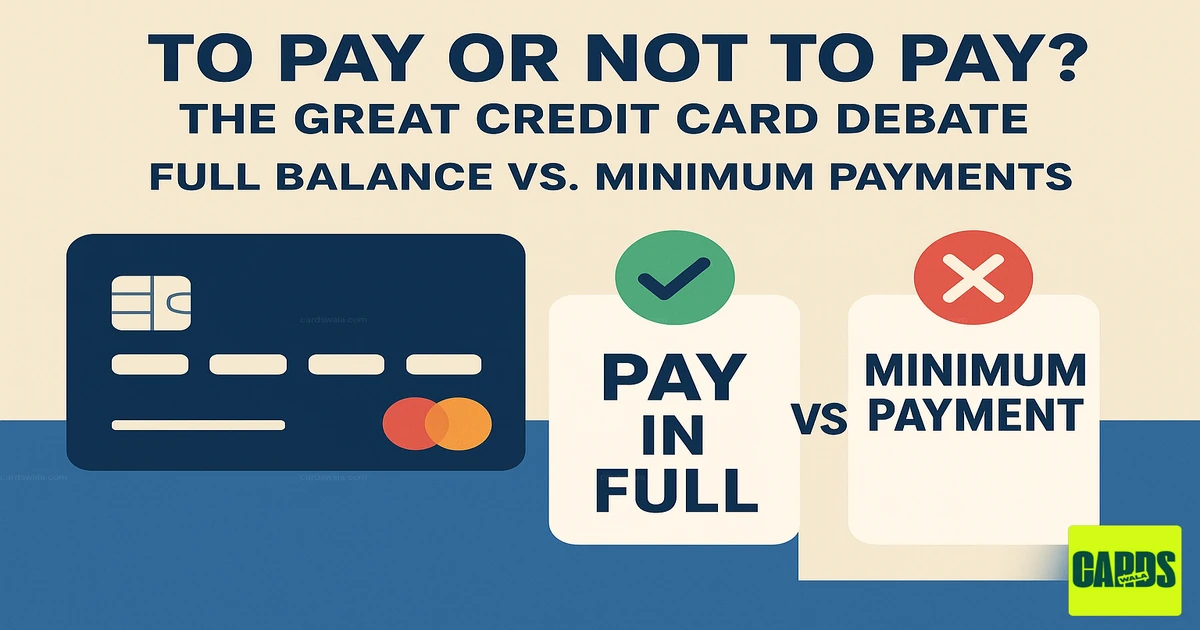
To Pay or Not to Pay? The Great Credit Card Debate: Full Balance vs. Minimum Payments
Every month when the credit card bill arrives, one pressing question stares back at you: should you clear the balance in full or just pay the minimum amount due? While minimum payments may look like a lifeline for managing cash flow, the reality is that the long-term consequences can be financially draining. Let’s break down the debate between these two approaches so you can make smarter choices for your financial health.
The Temptation of Minimum Payments: A Quick Relief
The minimum payment is the bare minimum you need to pay to keep your account in good standing. Usually a small percentage of your outstanding balance, it ensures you avoid late fees and a negative mark on your credit report. For those struggling with immediate expenses, paying the minimum seems like a short-term relief.
But using this strategy month after month can trap you in an expensive cycle.
The Hidden Downsides of Minimum Payments: A Silent Debt Trap
Relying only on minimum payments might keep creditors off your back, but it comes with hidden costs:
- Interest Accumulation: With credit card APRs among the highest in lending, your unpaid balance keeps rolling forward. The compounding effect means you’ll soon be paying interest on interest, inflating your debt.
- Slow Progress: A large chunk of your payment goes toward interest rather than the principal. This drags out repayment timelines-sometimes years or even decades.
- Credit Score Impact: Carrying high balances raises your credit utilization ratio, a key factor in your credit score. High utilization signals financial stress and can drag your score down.
In short, minimum payments may keep your account alive, but they also keep you in debt much longer than you’d expect.
Paying in Full: The Smart Path to Financial Wellness
On the other side of the debate lies the most financially healthy habit-paying off your balance in full. Here’s why this strategy stands out:
- No Interest Charged: Clearing your dues within the billing cycle means you enjoy an interest-free period. Essentially, you get to use the bank’s money at no cost.
- Boosted Credit Score: Low credit utilization from full payments paints you as a responsible borrower, helping your credit score climb higher.
- Peace of Mind: Avoiding debt frees up money for your real financial goals-savings, investments, or lifestyle upgrades. The psychological benefit of being debt-free is equally powerful.
Full Balance vs Minimum Payment: A Quick Comparison
| Aspect | Paying in Full | Minimum Payment Only |
|---|---|---|
| Interest | Zero interest if paid on time | High interest on unpaid balance |
| Debt Timeline | Cleared every month | Can take years or decades |
| Credit Score | Boosts score with low utilization | High utilization may lower score |
| Financial Stress | Provides peace of mind | Creates long-term money pressure |
| Wealth Building | More money for savings/investments | Income locked in repaying debt |
The Final Word: Pay in Full Whenever Possible
While minimum payments are necessary in genuine financial crunches, they should never become your default practice. The interest burden, extended repayment timelines, and credit score damage outweigh the temporary relief.
The clear winner in this debate is paying your balance in full. And if paying in full isn’t always possible, aim to pay as much above the minimum as you can. Every extra rupee goes directly toward your principal, helping you escape debt faster and save more in the long run.
Building the habit of full balance payment is not just good financial management-it’s the foundation of long-term financial freedom.
Check Out These Cards



CardsWala Crew
Credit Card Expert & Financial Writer