CheQ AU Credit Card Review: India's First LED Tap Card with 12% Unified Rewards on Bills, Travel & UPI
If you already use CheQ to pay your credit card bills, you know the core promise: make bill payments rewarding instead of just routine. The CheQ AU Credit Card extends that same idea to everyday spending — with a very visible twist.
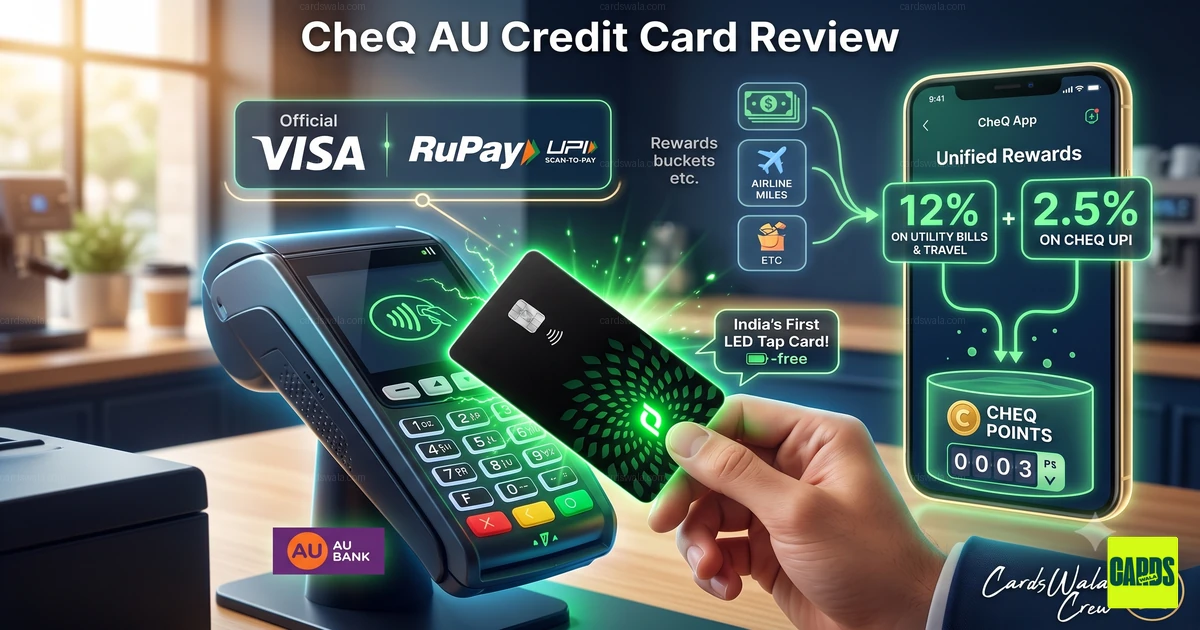
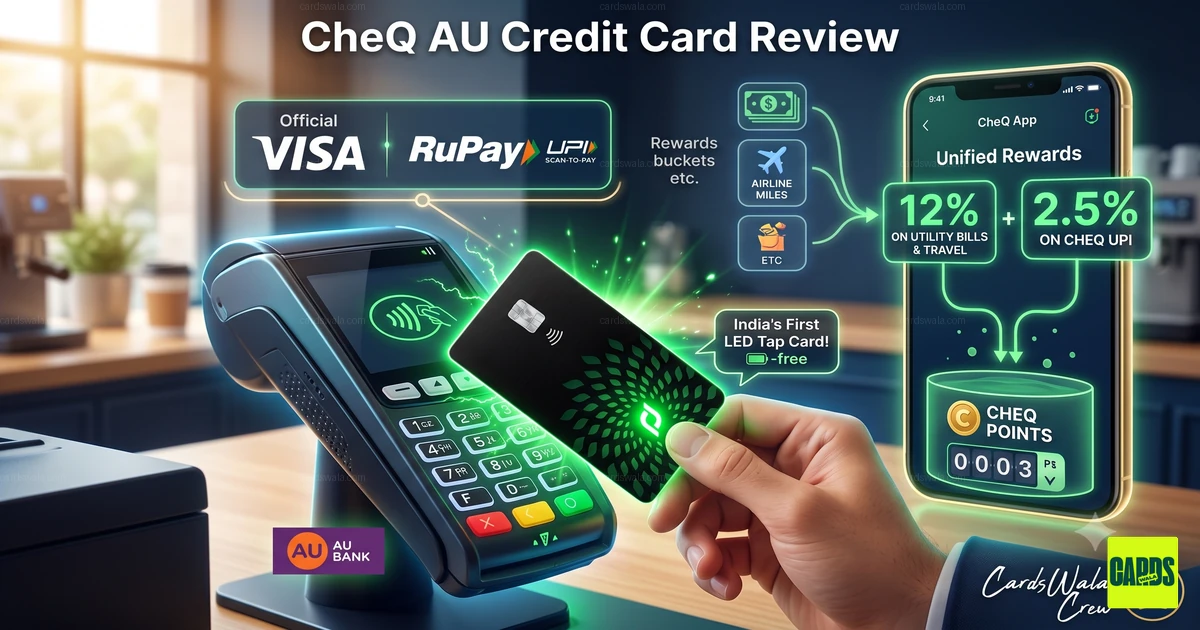
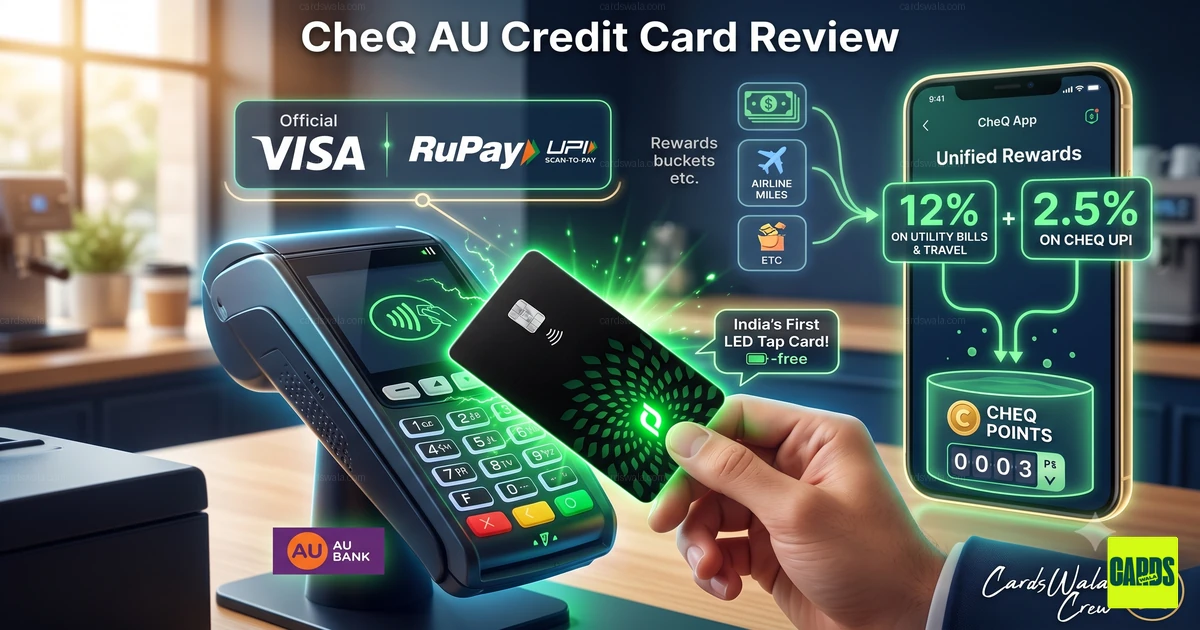
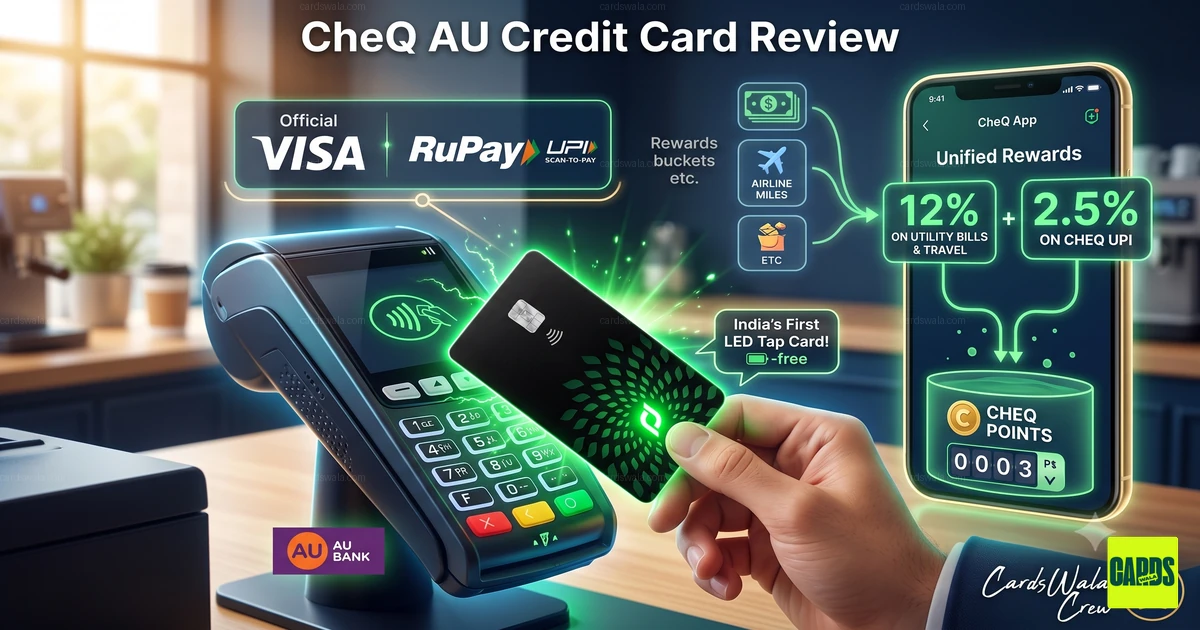
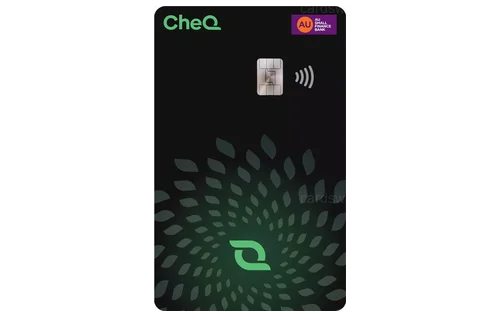
It is India's first credit card to introduce an LED-powered tap interaction. Every time you tap to pay, the card lights up — powered entirely by the POS terminal's NFC field, with no battery inside. It is a small moment of feedback that makes a tap feel confirmed, modern, and a little more engaging than the usual silent beep.
But the LED is just the surface. The real shift is underneath: a single rewards ecosystem inside the CheQ app that tries to remove the usual fragmentation of points, cashback, and redemption portals.
Here is a practical, no-hype look at how the card works, where the 12% comes from, and who it actually makes sense for.
From Bill Payments to One Card: Why CheQ Built This
CheQ started as a credit card bill payment platform — a place to track due dates, pay multiple cards in one flow, and earn rewards for paying on time. That gave it a unique view of how people actually use credit: multiple cards, multiple due dates, and rewards scattered across different bank portals.
The CheQ AU Credit Card (issued with AU Small Finance Bank) is built to bring that scattered experience together:
- Your bill payments, UPI spends, online shopping, and travel bookings all earn in one currency — CheQ Points — inside one app
- Your card works for both Visa-based global/online payments and RuPay-based UPI / scan-and-pay use cases — see how RuPay credit cards on UPI work
- It is Lifetime Free — no joining fee, no annual fee — so the rewards math does not have to fight a fee every year. Compare with other lifetime free cards
Think of it less as "another card to add" and more as the card that powers the CheQ ecosystem you may already use for bills.
The LED Tap: What Lights Up and Why It Matters
Most credit cards confirm a tap with just a terminal beep. The CheQ AU design adds a visual layer.
How it works:
- An embedded LED circuit draws power from the POS terminal's NFC field at the moment of tap
- No battery, no charging, no extra step for you
- Light = field detected + tap interaction completed
Why it is useful beyond novelty:
- Instant visual confirmation at checkout, especially in noisy stores where you might miss the beep
- More intentional payments — you see the tap succeed, which reduces the "did it go through?" double-tap
- Modern, intuitive feedback — similar to how phone payments vibrate, the card gives you a physical response without adding complexity
It does not change the security of the tap (that is still governed by Visa/RuPay tokenization and your bank's authorization), but it makes the most frequent interaction — the tap — more visible and reassuring.
Real Rewards, One Ecosystem: CheQ Points Explained
Instead of separate cashback buckets, airline miles, or portal-specific points, all earnings on this card accrue as CheQ Points — a single rewards currency you can see and redeem inside the CheQ app.
| Spend Type | Reward Rate | Where It Applies |
|---|---|---|
| 12% | Apple via Unicorn (website & offline stores), Amazon, Flipkart, Zomato, BigBasket, CheQ Travel, and Utility Bills paid on CheQ | High-frequency CheQ ecosystem spends — see also Amazon Pay ICICI Bank Credit Card for comparison |
| 5% | Everyday spends | Food delivery, shopping, quick commerce, travel (outside the 12% partners) |
| 2.5% | CheQ UPI via RuPay | Scan QR and pay via UPI using the RuPay variant — What is UPI Lite and how credit on UPI works |
| 1% | All other eligible spends | Everything else that earns — see best cards for online shopping |
What makes this different:
-
Single currency, not fragments. You do not need to track HDFC points here, AU points there, and Amazon Pay balance elsewhere. One balance, one history, one place to redeem. That alone removes a lot of "points expired because I forgot where they were" pain.
-
Bill payments and UPI also earn. Utility bills paid through CheQ (electricity, broadband, etc.) fall in the 12% tier when paid via CheQ, and UPI QR spends via the RuPay card earn 2.5% — categories where most credit cards give 0% or very low rewards.
-
No fee drag. Because the card is Lifetime Free, you do not need to spend ₹1 lakh+ just to justify an annual fee before rewards feel "real." Every point starts as net value.
Important to understand: Like all accelerated reward structures, the 12% and 5% rates apply to eligible spends via eligible channels and are subject to caps, merchant identification (MCC), and monthly/quarterly limits defined in the card's MITC and CheQ app T&Cs. Always check the current caps and exclusions before planning a large purchase around a reward rate.
How Redemption Works: Gift Cards, CheQ Travel, and Bill Payments
Earning is only half the story. Redemption is where many reward programs lose people — confusing portals, low value per point, or vouchers you never use.
With CheQ Points, redemption stays inside the same ecosystem:
- Gift cards across 40 leading Indian brands: Convert points to brand vouchers you actually shop with (from shopping and lifestyle to food and travel brands) — no separate portal login needed.
- CheQ Travel — flights and hotels inside the app: Redeem points directly at checkout when booking flights or hotels on CheQ Travel. CheQ positions this with lowest-ticket-price assurance and instant redemption at checkout, so points turn into travel without a separate transfer to an airline program. If your everyday spending already gives you 5% back as points, that next weekend trip is partly funded by your grocery and quick-commerce history.
- Against credit card and utility bill payments: You can also redeem points against your card and utility bills — effectively turning rewards into lower payable amounts within the same app where you pay bills. For people who prefer cash-like value over vouchers, this is the most direct use case.
Because everything lives in CheQ, you see "earned here, redeemable here" without jumping between three bank apps.
One Card, Every Experience: Visa + RuPay Integration
In India, your payment context changes dozens of times a day — tap at a store, scan a QR at a tea stall, pay online, book a flight.
The CheQ AU Credit Card is designed to cover that spread with two networks in one product:
- Visa for global acceptance and online transactions — works on international gateways, subscriptions, and in-store Visa taps. Explore other Visa cards from HDFC and SBI
- RuPay to power UPI and everyday spend use cases — link the RuPay variant to UPI apps (BHIM, Google Pay, PhonePe, CheQ UPI) and pay by scanning any UPI QR, while still earning credit card rewards (2.5% on CheQ UPI) — how to link RuPay cards to UPI
Whether it is scanning a QR at your local kirana, shopping on Amazon, or planning your next trip on CheQ Travel, the positioning is one card that follows you across tap, swipe, scan, and online.
Lifetime Free: Why No Annual Fee Changes the Math
At ₹0 joining fee and ₹0 annual fee (Lifetime Free), the card removes the most common regret with premium rewards cards — "I earned points, but the fee ate them."
That matters especially for three groups:
- New-to-credit users who want rewards without committing to ₹999+ fees
- Existing CheQ bill payers who already pay utility and card bills via the app and can now earn 12% on that flow without adding cost
- UPI-first spenders who want credit on UPI (via RuPay) but do not want a fee for a card they will use for ₹200-₹500 QR transactions
No fee does not mean unlimited rewards — caps and eligibility still apply — but it does mean you can test the ecosystem without a sunk cost.
Putting It Together: What Does This Look Like in Practice?
Example 1 — The CheQ-native household: You pay ₹8,000 in utility bills via CheQ, order ₹6,000 on BigBasket and Zomato, and do ₹20,000 in general online shopping in a month. At 12% on the first bucket and 5% on everyday spends, the bulk of that earns at accelerated rates as CheQ Points — redeemable next month on CheQ Travel or as gift cards. A traditional 1% flat card would have given a fraction of that.
Example 2 — The UPI scanner: You spend ₹15,000 a month scanning QRs at small merchants (chai, groceries, pharmacy). Most credit cards earn 0% on those. Via the RuPay variant on CheQ UPI at 2.5%, that same behaviour now earns in the same points pool that you use for flights.
Example 3 — The careful redeemer: You would rather not chase airline miles. You redeem CheQ Points straight against your credit card bill payment inside CheQ — effectively lowering your next bill. Simple, cash-like value without learning a miles chart.
Who Should Consider This Card?
- You already pay bills on CheQ (or plan to) — the 12% on utility bills paid via CheQ is the most distinctive lever and stacks with your existing bill-pay habit
- You shop frequently on Amazon, Flipkart, Zomato, BigBasket, or Apple via Unicorn — these are the core 12% partners where the rate is most meaningful
- You use UPI daily and want credit on UPI without carrying a separate RuPay-only card
- You want one rewards balance instead of tracking points across 3-4 bank portals — especially if you are building your first rewards strategy
- You prefer Lifetime Free over fee-plus-benefits math
Reconsider or compare more if: your spends are heavily focused on categories like rent, fuel, or wallets (often excluded or low-reward across most cards), or if you are a high-value travel spender who prefers direct airline miles over unified points — check the cap and per-point value for CheQ Travel vs. your preferred airline program.
A Smarter Way to Pay Bills and Spend — Without Fragmentation
The CheQ AU Credit Card is not trying to be the most complex card with 15 different multipliers you need a spreadsheet to track. It is trying to do the opposite: make every tap light up, and every spend — whether a UPI scan, a bill payment, or a BigBasket order — count in one place.
If you already live inside the CheQ ecosystem for bill payments, this card turns that routine into a loop: pay bills on CheQ → earn CheQ Points at 12% → redeem on CheQ Travel or against future bills. With Visa for global/online and RuPay for UPI, it is positioned as one card for tap, swipe, scan, and online.
Exploring It on CheQ
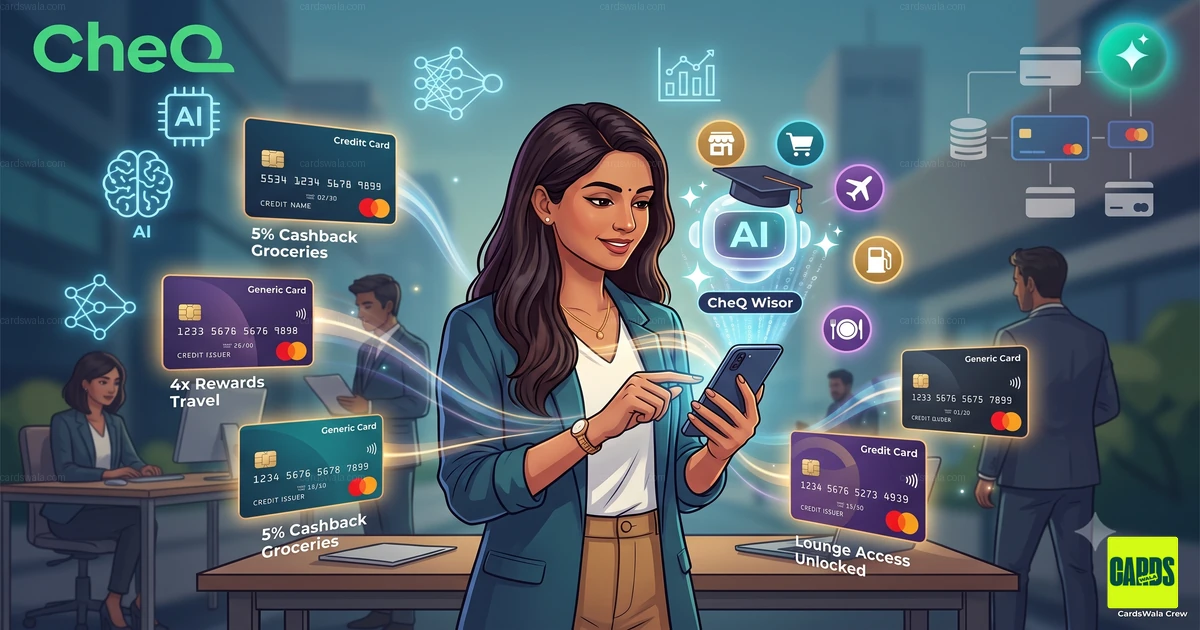
If you use CheQ for bill payments, open the CheQ app to check your eligibility, current caps, and the live 12% partner list (Apple via Unicorn, Amazon, Flipkart, Zomato, BigBasket, CheQ Travel, Utility Bills on CheQ) before applying. As with any credit card, review the MITC, fees, interest, and reward capping rules so the 12% / 5% / 2.5% math you plan with is the math you actually get. Also compare spends with tools like the CheQ Wisor AI expert to see which of your existing cards fits best for a given transaction.
Educational note: Rewards, partner lists, caps, and redemption values change over time. The LED interaction is powered by the POS NFC field and requires no battery, but tap success still depends on terminal compatibility and network authorization. Always verify current T&Cs in the CheQ app before a high-value transaction.
Keep Exploring
- Confused about many cards? Meet CheQ Wisor — India’s first AI credit card expert
- Learn the ecosystem: How credit card networks work — Visa, Mastercard, RuPay and What is an MDR and who pays for rewards
- Maximise every swipe: Credit card stacking 101 and Cashback vs Reward Points vs Air Miles
Check Out These Cards
CardsWala Crew
Credit Card Expert & Financial Writer