How to Transfer Money From Your Credit Card to a Bank Account: The Complete 2025 India Guide
Ever found yourself in a situation where you need immediate funds in your bank account, but your money is tied up? Perhaps it's for an urgent UPI payment, a down payment, or a medical emergency. In such moments, your credit card's available limit can seem like a lifesaver.
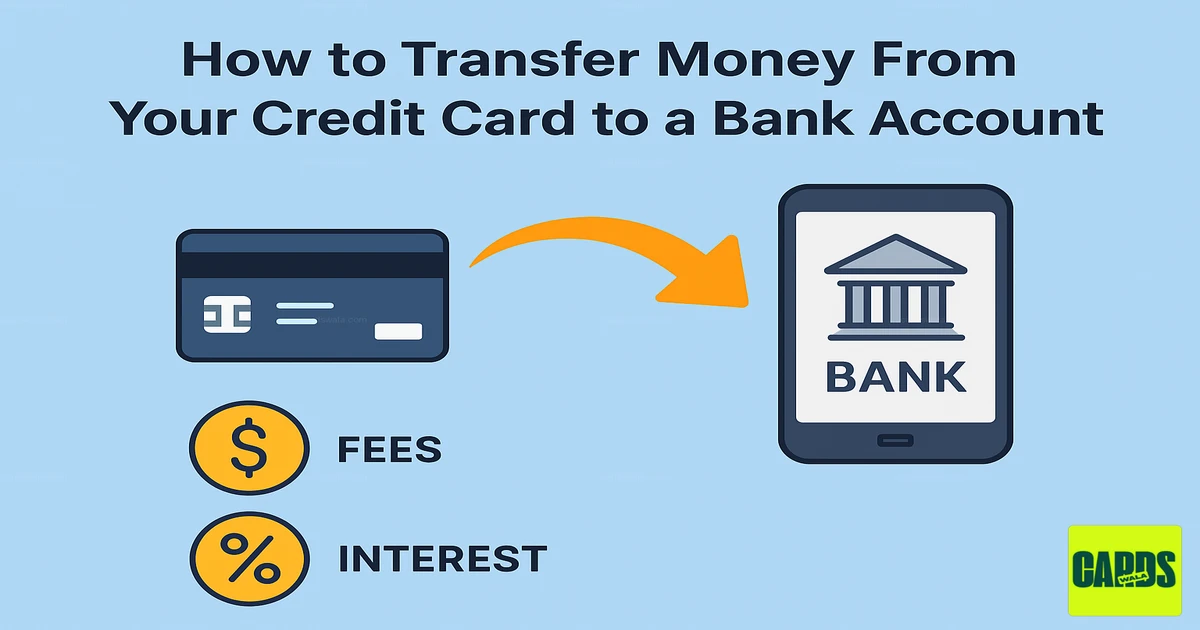
While it's possible to move money from your credit card to your bank account, it's a financial move that should be approached with caution. It's not a simple transfer; it's essentially a loan. This comprehensive guide will walk you through the five primary methods to do this in India, highlighting the associated fees, interest rates, and potential impact on your credit score.
5 Simple Ways to Transfer Money from Credit Card to Bank Account
Here are the most common methods available to transfer your credit limit into cash in your bank account.
Method 1: Using Net Banking
Many leading banks now allow you to transfer funds directly from your credit card to your bank account through their internet banking portal. This is often marketed as a "personal loan on your card" or a direct transfer feature.
-
How it Works:
- Log in to your credit card's net banking portal.
- Navigate to a section like "Fund Transfer," "Transact," or "Loan on Card."
- Select the option to transfer money to your bank account.
- Enter the desired amount and select your registered bank account.
- Authenticate the transaction using an OTP.
-
Associated Fees & Costs:
- Processing Fee: Expect a one-time fee of around 2.5% to 4% of the transaction amount.
- Interest Rate: Interest is charged from day one and is usually higher than the rate for regular purchases.
Method 2: Through E-Wallets
Digital wallets can act as an intermediary to move funds from your credit card to your bank.
-
How it Works:
- Open your preferred e-wallet app (like Paytm, PhonePe, etc.).
- Use the "Add Money" feature to load your wallet using your credit card.
- Once the money is in your wallet, use the "Send to Bank" feature.
- Enter your bank account details and transfer the funds.
-
Associated Fees & Costs:
- Loading Fee: Most wallets now charge a fee of 2% to 3% (+ GST) when you add money using a credit card.
- Transfer Fee: Some wallets may charge an additional small fee for the wallet-to-bank transfer.
Method 3: Cash Advance at an ATM
This is the most direct but also the most expensive method. It involves using your credit card like a debit card to withdraw cash from an ATM.
-
How it Works:
- Visit any ATM.
- Insert your credit card and enter your PIN.
- Select the "Cash Withdrawal" option.
- Enter the amount you wish to withdraw (within your cash limit).
- Deposit this cash into your bank account.
-
Associated Fees & Costs:
- Cash Advance Fee: A hefty fee of 3% to 5% of the withdrawn amount, with a minimum charge of around ₹500.
- Immediate High Interest: The interest rate on cash advances is extremely high and starts accruing from the moment of withdrawal. There is no interest-free period.
Method 4: Using a Credit Card Cheque
Some credit card providers offer a cheque facility against your credit limit.
-
How it Works:
- Request a chequebook from your credit card issuer.
- Write a cheque payable to "Self."
- Deposit the cheque into your bank account.
-
Associated Fees & Costs:
- Treated as a Cash Advance: This transaction is almost always treated the same as an ATM cash withdrawal. You'll face similar high processing fees and immediate, high-interest charges.
Method 5: Third-Party Money Transfer Apps
Several apps and services specialize in money transfers, allowing you to use your credit card as a funding source.
-
How it Works:
- Download and register on a third-party app that facilitates such transfers.
- Add your credit card as a payment method and your bank account as the recipient.
- Initiate the transfer.
-
Associated Fees & Costs:
- Convenience Fee: These platforms charge a convenience or service fee, which can range from 1.5% to 4% of the transaction amount. Always verify the final amount before confirming.
Is It a Good Idea? Risks & Impact on Your Credit Score
Before you proceed, it's vital to understand the downsides:
- High Costs: As detailed above, no method is free. The combination of processing fees and high-interest rates can make this a very expensive way to get cash.
- Impact on Credit Score: Transferring a large amount from your credit card increases your Credit Utilization Ratio (CUR). A high CUR (generally above 30%) can negatively impact your CIBIL or credit score, making it harder to get loans in the future.
- No Reward Points: These transactions are typically classified as cash withdrawals or fund transfers and do not earn you any reward points.
Final Verdict: A Tool for Emergencies Only
Transferring money from your credit card to your bank account is a feature designed for absolute emergencies, not for regular use. While it provides quick access to cash, the costs are significant.
Our recommendation: Always evaluate all other options first. If you must use this facility, choose the method with the lowest fees (typically net banking or a trusted e-wallet) and, most importantly, have a solid plan to repay the amount as quickly as possible to avoid spiraling into high interest debt.
Check Out These Cards
CardsWala Crew
Credit Card Expert & Financial Writer