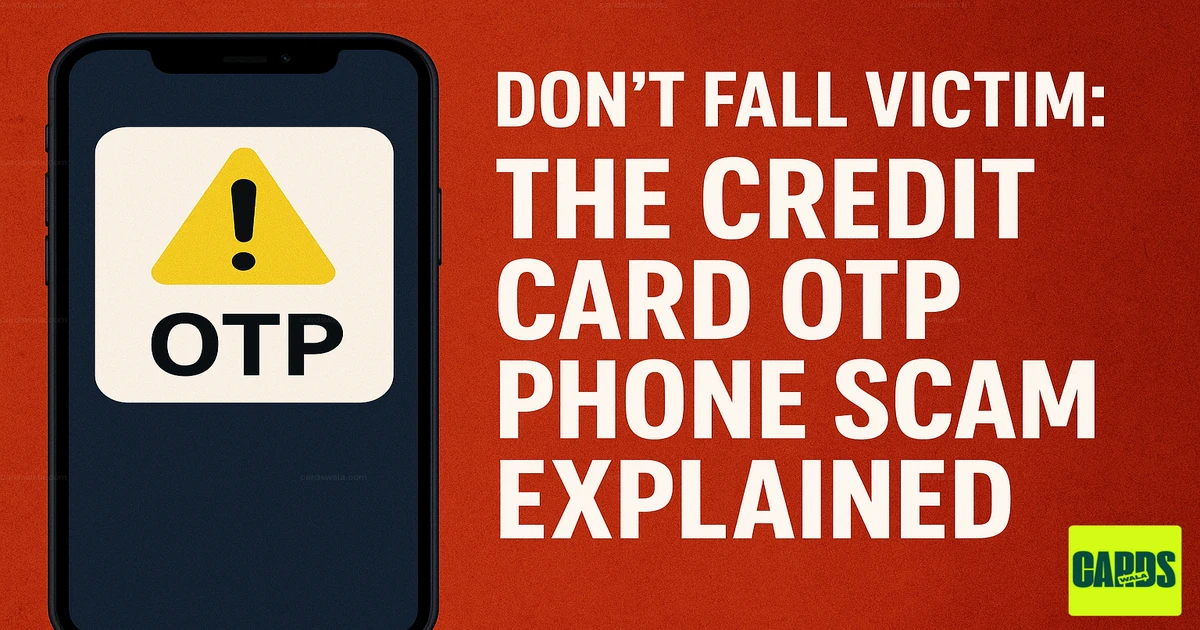
Don't Fall Victim: The Credit Card OTP Phone Scam Explained
Are you worried about credit card fraud? You should be! The "One-Time Password" (OTP) phone scam is a rampant threat, tricking countless individuals into handing over their hard-earned money. In this essential guide, we'll expose how this cunning scam works and, more importantly, equip you with the knowledge to protect your finances.
What Exactly is the Credit Card OTP Phone Scam?
The credit card OTP (One-Time Password) phone scam is a sophisticated type of social engineering fraud. Here's the core of it: a scammer calls you, pretending to be from your bank or credit card company. Their ultimate goal? To manipulate you into revealing the crucial OTP sent to your phone. Once they have that OTP, they can complete unauthorized transactions using your credit card details, which they've likely obtained through other illicit means.
This isn't just a nuisance; it's a direct threat to your financial security.
How Scammers Execute the OTP Phone Scam (A Step-by-Step Breakdown)
These criminals are masters of deception. They play on fear, urgency, or even the promise of rewards to trick you.
- Data Acquisition: Before the call, scammers often illegally acquire some of your basic credit card information (like your name, card number, and phone number). This could be from data breaches, phishing attacks, or card skimming.
- The Call & Impersonation: You receive an unexpected call. Often, scammers use caller ID spoofing to make it appear as though the call is genuinely coming from your bank's official number. This instantly builds false trust.
- The Convincing Story (The Pretext): This is where social engineering truly begins. The scammer will spin a plausible tale to create urgency or excitement:
- "Urgent Fraud Alert!" "We've detected a suspicious transaction on your card. To block it, we need to verify your identity with a code we're sending you. Please read it back."
- "Card Blocked/Expired!" "Your card is about to be blocked due to KYC issues. To reactivate/upgrade, kindly share the OTP for verification."
- "Exciting Rewards/Refunds!" "Congratulations! You've qualified for bonus reward points. To claim it, we just need the OTP." Or, "We're processing a refund, please confirm the code."
- The Real-Time Transaction: While talking to you, the scammer simultaneously uses your stolen card details to initiate a purchase on an e-commerce site.
- The OTP Request: Your bank, detecting the online transaction, sends a legitimate OTP to your registered phone number. The scammer, still on the line, demands this "verification code," "cancellation code," or "activation code" from you.
- The Financial Hit: The moment you share the OTP, the scammer enters it, the transaction is approved, and your money is gone. They usually disconnect immediately afterward.
The Golden Rule of OTP Security: Your Unbreakable Shield
This is the single most critical piece of advice you will ever receive regarding your financial security:
Your OTP is the digital key to your money. It's designed to authenticate YOUR transactions. Therefore, you must NEVER, EVER share your OTP with ANYONE.
- No bank employee will ever ask for your OTP.
- No credit card company representative will ever ask for it.
- No genuine support staff will ever need it.
- Anyone asking for your OTP is a scammer. No exceptions.
How to Stay Safe: 5 Essential Protection Tips
Being vigilant is your best defense. Here are actionable steps to secure your finances:
- Always Be Skeptical of Unsolicited Calls: If your "bank" calls you out of the blue, be immediately suspicious, even if the caller ID seems legitimate.
- Hang Up and Verify Independently: If you're concerned, hang up. Find the official customer care number on the back of your credit card or on the bank's official website and call them directly to confirm.
- Read the OTP SMS Carefully: The message from the bank will clearly state the merchant name and the transaction amount. If the caller's story doesn't match the SMS, it's a definite scam.
- Never Share Confidential Details: This includes your OTP, CVV, PIN, card expiry date, or internet banking password. Legitimate organizations will never ask for this information over a call.
- Enable Instant Alerts: Ensure you have transaction alerts enabled via SMS and email. This allows you to detect any fraudulent activity the moment it happens.
What to Do If You've Been Scammed
If the worst has happened and you've fallen victim, act immediately. Every second counts.
- Block Your Card Immediately: Call your bank's 24/7 customer service number and have them block your credit card to prevent any further unauthorized transactions.
- Report to Cyber Crime Police:
- Call the National Cyber Crime Helpline at 1930. This is a critical first step as they can help track and block the fraudulent money transfer.
- File a formal complaint on the National Cyber Crime Reporting Portal: https://www.cybercrime.gov.in/
- Inform Your Bank Officially: Follow up with your bank by filing a written complaint about the fraudulent transaction. This is necessary for the chargeback process.
- Gather All Evidence: Keep a record of the scammer's phone number, the time and date of the call, and all related SMS messages. This will be crucial for the police investigation.
Stay informed, stay alert, and protect your finances. Share this guide with your friends and family to ensure they don't fall for the OTP scam.
Check Out These Cards
CardsWala Crew
Credit Card Expert & Financial Writer