Decoding NH and NA in CIBIL Reports: A Comprehensive Guide for Indian Borrowers
In the Indian financial ecosystem, your CIBIL score acts as your "financial character certificate." While most people aim for a solid three-digit number (like 750+), many open their reports only to find two mysterious letters: NH or NA.
If you are a first-time borrower or returning to credit after years, seeing these instead of a score can be confusing. This guide breaks down exactly what these terms mean, why they appear, and how they impact your loan eligibility.
🔍 What do NH and NA Mean?
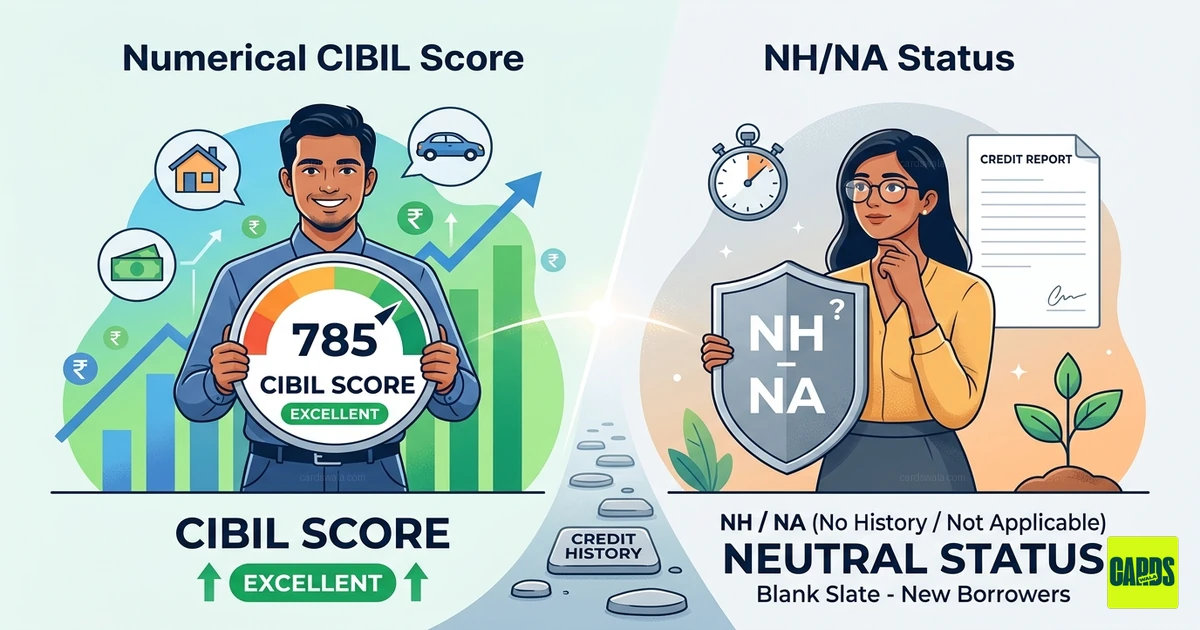
Technically, NH and NA signify the absence of a credit track record. They are not "negative" marks, but rather "neutral" placeholders.
- NH (No History): 🆕 This indicates you have never taken a loan or owned a credit card. There is no footprint for CIBIL to track.
- NA (Not Applicable): 🚫 This means your credit history is not available. This happens if you haven't used any credit products (loans/cards) for several years, making your old data obsolete.
Pro Tip: In newer report formats, you might see a score of -1. This is the numerical equivalent of NH/NA, often referred to as being "Credit Ignorant."
🧐 Why is there no score on my report?
There are four primary reasons why your CIBIL report might show NH or NA:
- First-Time Borrower: You have never applied for a credit card or a loan in your name.
- Long Credit Inactivity: You had a loan years ago, but you haven't touched a credit product in the last 24 to 36 months.
- Recent Credit Entry: You just got your first credit card last month. It usually takes 6 months of activity to generate a numerical score.
- Add-on Card Holder: You use a credit card, but it's an "Add-on" card linked to your parent’s or spouse’s account. In this case, the credit history belongs to the primary holder, not you.
📊 NH/NA vs. Low Score: Which is better?
| Feature | Low Score (300-600) 📉 | NH / NA Status ⚪ |
|---|---|---|
| Interpretation | High Risk (Poor Repayment) | Unknown Risk (Fresh Start) |
| Loan Approval | Extremely difficult | Possible with income proof |
| Bank's View | Negative / Red Flag | Neutral / Blank Slate |
The Reality Check: While NH/NA is better than a bad score, banks still prefer a high score (750+). Without a score, a bank has no way to predict if you will pay them back on time.
🛠️ How to move from NH/NA to a 750+ Score
If you are planning to apply for a Home Loan or Car Loan soon, you need to turn those letters into numbers. Here is the roadmap:
- 💳 Get a Secured Credit Card: Apply for a credit card against a Fixed Deposit (FD). Most Indian banks (SBI, ICICI, Kotak) offer these instantly. It’s the fastest way to start your history.
- 📱 Buy on EMI: Purchase your next smartphone or appliance using No-Cost EMI through providers like Bajaj Finserv or Amazon Pay Later. These are reported as "Consumer Durable Loans."
- 🤝 Become a Co-applicant: If a family member with a good score takes a loan, joining as a co-applicant can help kickstart your report.
- 📅 Consistency is Key: Once you get your first card or loan, ensure 100% on-time payments. Just one late payment in your first 6 months can permanently damage your budding score.
🏁 Final Verdict
Seeing NH or NA on your CIBIL report is not a reason to panic. It simply means you are a "freshman" in the world of credit. By taking small, disciplined steps today, you can build a robust credit profile that unlocks lower interest rates and premium financial products in the future.
Check Out These Cards


CardsWala Crew
Credit Card Expert & Financial Writer