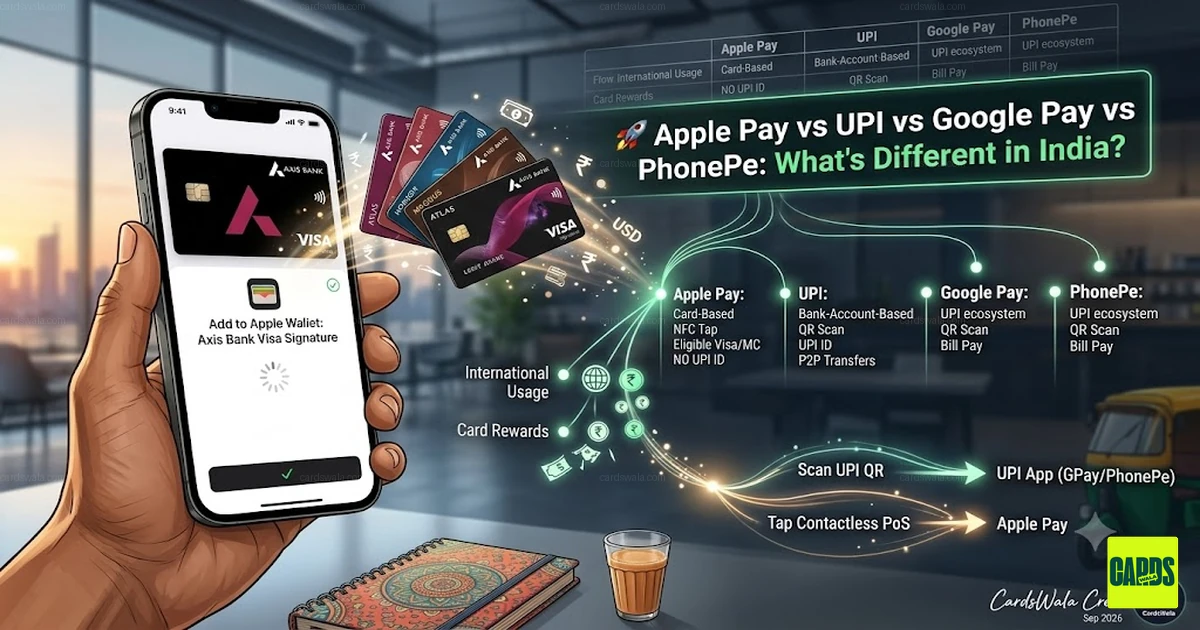
Apple Pay vs UPI vs Google Pay vs PhonePe: What's Different in India?
Apple Pay has finally arrived in India, but Indian users already have several popular digital payment options.
UPI apps such as Google Pay and PhonePe are widely used for QR payments, bank transfers and peer-to-peer payments.
Apple Pay takes a different approach.
It is primarily a digital wallet for supported payment cards, with a strong focus on contactless card payments using Apple devices — see how the India launch works.
So how is Apple Pay different from UPI, Google Pay and PhonePe?
Let's compare them.
Apple Pay vs UPI: The Basic Difference
The biggest difference is the underlying payment system.
Apple Pay is primarily card-based.
UPI is primarily bank-account based.
With Apple Pay, you add an eligible card to Apple Wallet and use that card through your Apple device.
With UPI, you generally connect your bank account to a UPI app and make payments using your UPI ID, QR code or other supported UPI methods.
Apple Pay vs Google Pay
The names can make these services sound similar, but they work differently in India.
Google Pay in India is primarily built around the UPI ecosystem.
Apple Pay is a card wallet and contactless payment system.
This means you can use Google Pay for things such as:
- Scanning UPI QR codes
- Sending money to another person
- Paying merchants
- Paying bills
- Bank-account based transactions
Apple Pay's initial India rollout focuses on:
- Eligible credit cards
- Contactless payments
- Supported online checkouts
- International card usage
Apple Pay vs PhonePe
PhonePe is also deeply integrated with India's UPI ecosystem.
Users can use PhonePe for:
- UPI QR payments
- Person-to-person payments
- Bill payments
- Merchant payments
- Other financial services
Apple Pay's initial India offering is different because it does not function as a UPI app.
It does not replace your UPI ID or provide the same UPI payment flows.
Comparison Table
| Feature | Apple Pay | UPI | Google Pay | PhonePe |
|---|---|---|---|---|
| Primary system | Card payments | Bank-account payments | UPI | UPI |
| Credit cards | Eligible cards | Depends on supported setup | Limited/depends on feature | Limited/depends on feature |
| UPI ID | No | Yes | Yes | Yes |
| QR payments | Not the primary use case | Yes | Yes | Yes |
| Contactless NFC | Yes | Not the standard flow | Depends on implementation | Depends on implementation |
| P2P transfers | No | Yes | Yes | Yes |
| Apple Watch | Yes | Depends on app | Depends on app | Depends on app |
| International card use | Yes, where supported | Limited | Depends on payment method | Depends on payment method |
| Card rewards | Depends on card | Depends on card/payment method | Depends on card/payment method | Depends on card/payment method |
Does Apple Pay Replace UPI?
No.
The two systems solve different payment problems.
For example, imagine you are buying something from a local merchant.
Using UPI
You can:
- Open your UPI app.
- Scan the merchant's QR code.
- Enter the amount.
- Authenticate the payment.
- Pay directly from your linked bank account.
Using Apple Pay
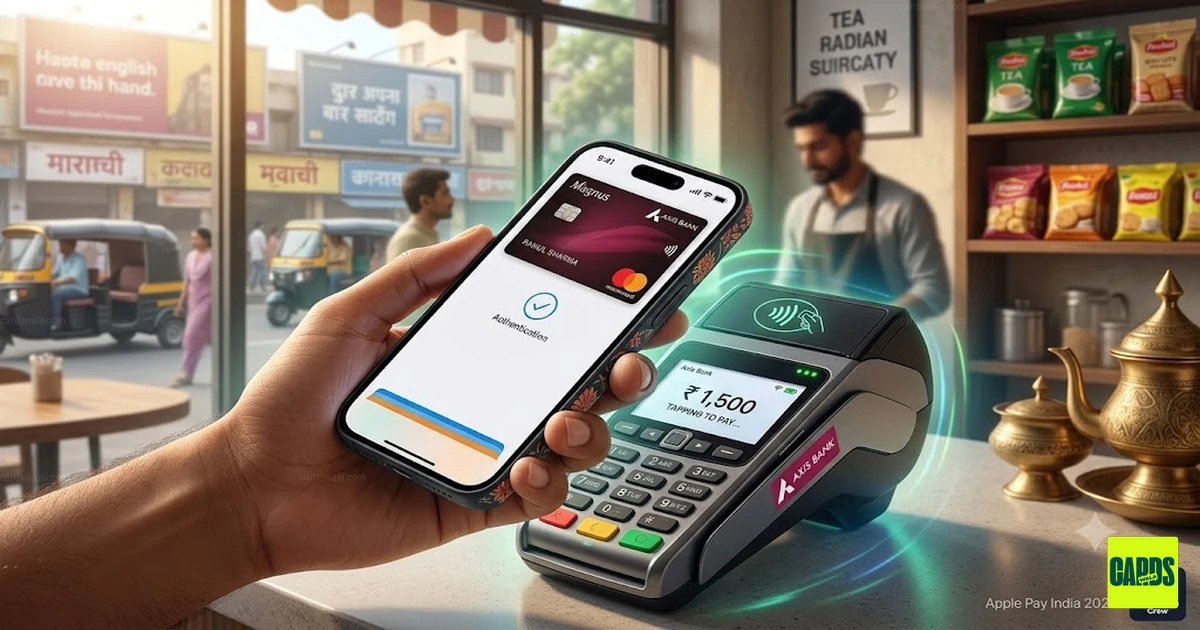
You would need a supported card already added to Apple Wallet.
At a compatible contactless terminal:
- Authenticate with Face ID or passcode.
- Hold your iPhone near the terminal.
- The card transaction is processed.
So the merchant's available payment infrastructure determines which method you can use.
What About Credit Cards?
This is one of the biggest differences.
Apple Pay's Indian launch is specifically relevant to users who want to use eligible credit cards through their Apple devices.
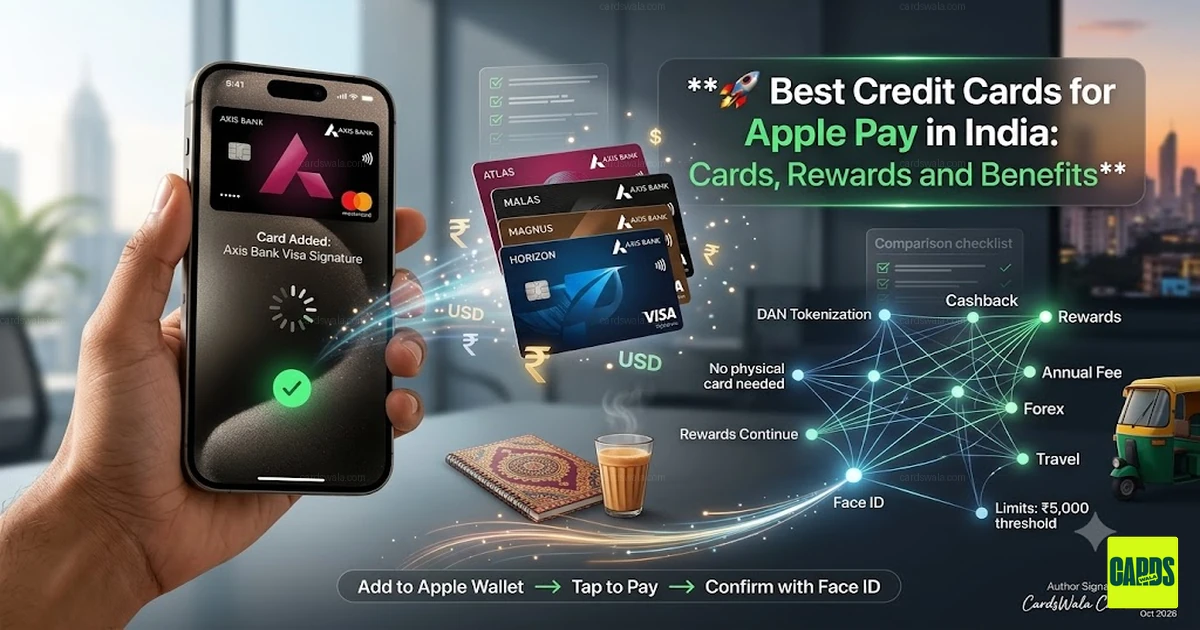
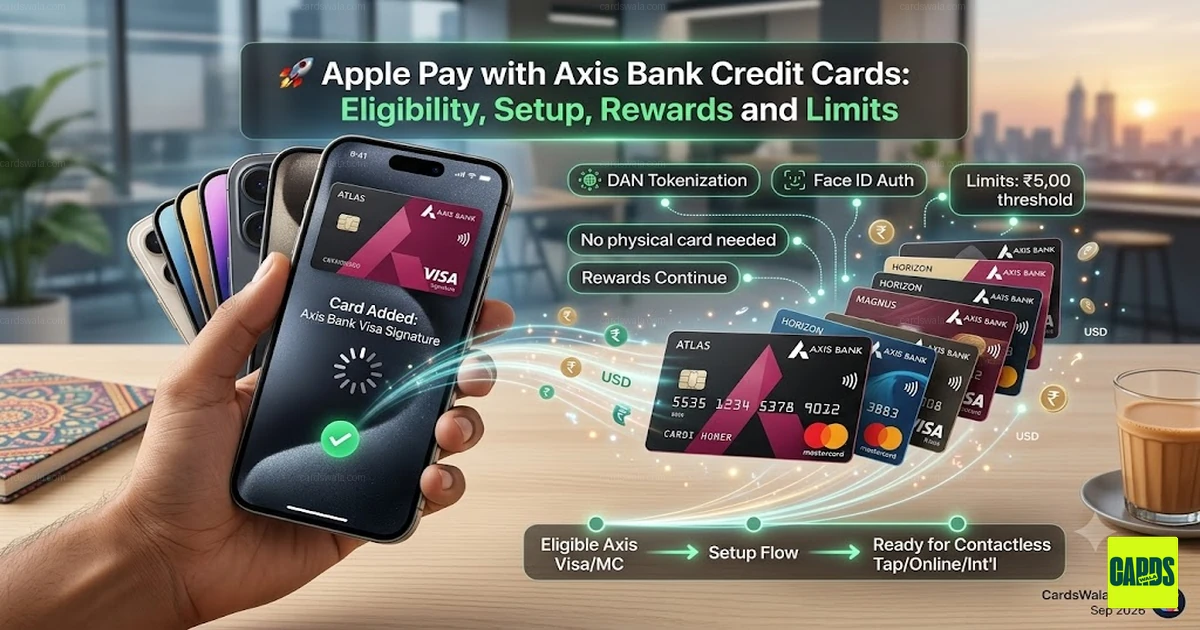
The initial launch supports eligible Axis Bank Visa and Mastercard credit cards.
This allows users to make contactless payments without physically presenting the credit card.
UPI has traditionally been associated with bank-account payments, although India's payment ecosystem also supports certain credit-card-linked UPI functionality.
The exact capabilities depend on the card network, bank and payment flow.
Do Apple Pay Transactions Earn Credit Card Rewards?
The reward depends on the underlying credit card.
Apple Pay itself is not a rewards program.
If an eligible Axis credit card provides cashback or reward points for a qualifying transaction, the applicable card terms determine whether the Apple Pay transaction receives that benefit.
This means you should compare the underlying credit cards rather than treating Apple Pay as a separate rewards system.
Is Apple Pay Faster Than UPI?
The answer depends on the payment environment.
At a compatible contactless terminal, Apple Pay can be very quick because you authenticate your device and tap it on the terminal.
UPI QR payments require opening the relevant app, scanning or selecting the payment method, entering or confirming the amount and authenticating the transaction.
However, UPI works across a much broader range of Indian merchant environments, especially where QR codes are available.
Can Apple Pay Scan UPI QR Codes?
Apple Pay's initial India launch is not a UPI QR payment system.
Therefore, you should not think of Apple Pay as a replacement for Google Pay or PhonePe when paying through a standard UPI QR code.
If a merchant only accepts UPI QR payments, you would still need a UPI-compatible payment app.
Can You Send Money to Friends Using Apple Pay?
The initial India launch does not provide the same person-to-person payment functionality as UPI.
For sending money to another person in India, UPI remains a separate payment mechanism.
Apple Pay is primarily being used for card-based purchases.
Apple Pay for International Payments
This is an area where Apple Pay can be particularly different from a typical Indian UPI transaction.
If your eligible credit card supports international transactions, Apple Pay can be used at international merchants that accept Apple Pay and the relevant card network.
However, your card's international transaction charges can still apply.
For frequent travellers, it is therefore important to compare:
- Forex markup
- International transaction fees
- Card rewards
- Airport lounge benefits
- Travel insurance
- Other travel benefits
Which Payment Method Should You Use?
Rather than treating these services as direct replacements, think about the payment situation.
For UPI QR Payments
UPI apps such as Google Pay and PhonePe are designed for this use case.
For Contactless Card Payments
Apple Pay can be used with eligible supported cards at compatible terminals.
For Person-to-Person Transfers
UPI provides the relevant payment infrastructure.
For International Card Payments
An eligible card through Apple Pay can be useful where Apple Pay and the relevant card network are accepted.
Can You Use Apple Pay and UPI Together?
Yes.
There is no need to choose only one.
An iPhone user can continue using UPI apps for QR payments and bank transfers while using Apple Pay for supported card payments.
The two systems can therefore coexist on the same phone.
Final Takeaway
Apple Pay's arrival does not mean UPI is being replaced.
Instead, India now has another digital payment option focused on card-based contactless payments and Apple-device integration.
UPI remains relevant for QR payments, bank transfers and person-to-person payments, while Apple Pay provides a different way to use supported credit cards.
For credit card users, the more important question is often not Apple Pay vs UPI, but which credit card you want to use through Apple Pay.
Factors such as rewards, cashback, annual fees and forex charges still depend on the underlying card.
Check Out These Cards

CardsWala Crew
Credit Card Expert & Financial Writer