💳 What Does a Negative Balance on Your Credit Card Mean? (India Guide)
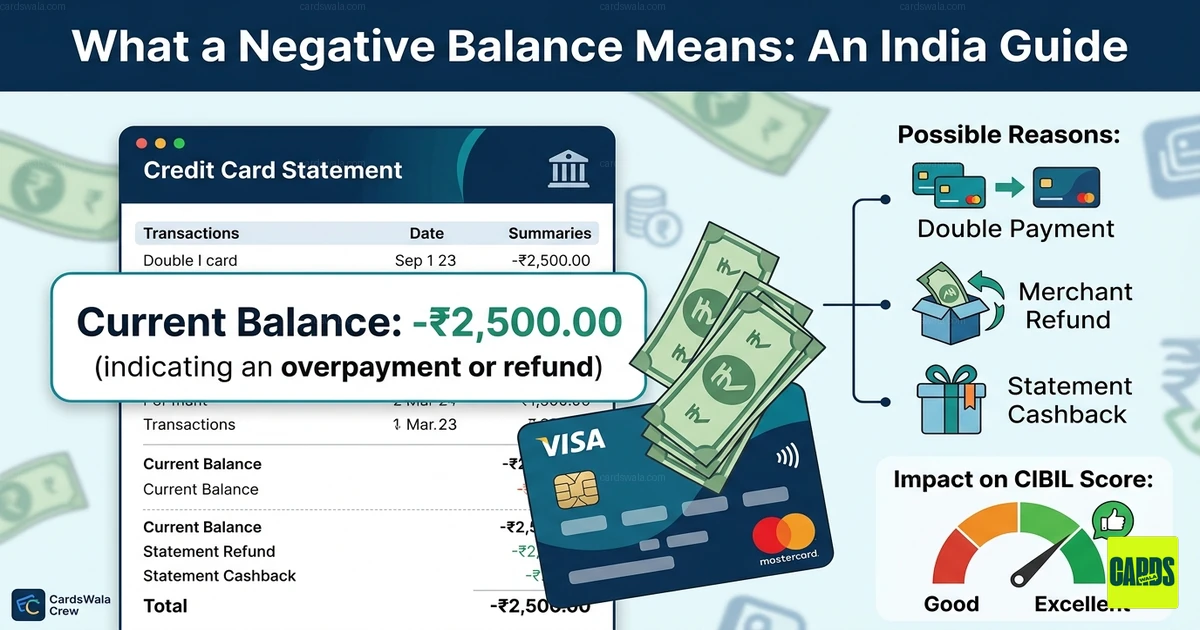
Most of us live in fear of seeing a high balance on our credit card statements. We’re used to the "Credit Limit Used" bar creeping up toward the red zone. But every once in a while, you might open your banking app and see a minus sign next to your balance—for example, -₹2,500. 📉
If you’re panicking thinking you owe "negative money," breathe easy. In the world of Indian banking, a negative balance is actually a credit to you. It means the bank owes you money. 🏦💰
Here is everything you need to know about why your statement is "in the black" and what you should do next.
🔍 What Exactly Is a Negative Balance?
On a credit card, a "positive" balance is the amount you have spent and must repay. Therefore, a negative balance is an overpayment. 🔄
Think of it as your credit card temporarily acting like a pre-paid card. You have a surplus sitting in your account that will automatically be used to pay for your future purchases.
🤔 How Did This Happen?
In the Indian context, there are usually four main culprits behind a negative balance:
- The "Double Payment" Blunder: 💸 You paid your bill via an app like CRED or PhonePe, forgot, and then paid it again through your bank's net banking.
- The Big Refund: 🛍️ You bought an expensive gadget on Amazon or Flipkart, cleared your total bill, and then decided to return the item. When the merchant processes the refund, it lands back on your card as extra cash.
- Cancelled Bookings: ✈️ You booked a flight or hotel that got cancelled. The refund often hits your card after you’ve already cleared your monthly dues.
- Statement Credits & Cashbacks: 🎁 Occasionally, a massive sign-up bonus or a heavy cashback (like on the Amazon Pay ICICI or Axis Ace card) might push your balance into the negative if your spends that month were low.
📈 Does It Affect My CIBIL Score?
This is a common concern for Indian borrowers. The short answer: No. 🚫📑
A negative balance doesn’t help or hurt your credit score directly. Credit bureaus like CIBIL, Experian, or Equifax care about whether you pay your bills on time and your Credit Utilization Ratio (CUR).
- Having a negative balance simply means your utilization is 0%.
- While it won't give you "bonus" points, it certainly keeps your score healthy by showing you have no outstanding debt.
✅ What Should You Do With the Excess Money?
You have two main options when you see that minus sign:
| Option | What Happens | Best For... |
|---|---|---|
| Just Spend It 🛒 | Your next purchases will "eat" into the negative balance. You won't have to pay a bill until the balance turns positive again. | Small amounts (under ₹5,000). |
| Request a Refund 🏦 | You can call your bank (SBI, HDFC, ICICI, etc.) and ask them to transfer the excess amount back to your linked Savings Account. | Large amounts (e.g., a ₹50,000 laptop refund). |
Pro Tip: While most banks will transfer the money back for free, some may charge a small processing fee for manual "Credit Balance Refunds." Always check with customer care first. 📞
⚠️ A Word of Caution
- Don’t use it for ATM Withdrawals: 🏧 Just because you have a negative balance doesn't mean you should go to an ATM. Even if the money is "yours," many Indian banks still charge Cash Advance Fees (often ₹500 or more) the moment you use your credit card at a machine.
- Inactive Cards: ⏳ If you have a negative balance on a card you never use, don't leave it there indefinitely. After a certain period, it can complicate account closing.
🏁 The Bottom Line
A negative balance on your credit card is nothing to worry about. It’s essentially a "pre-paid" credit for your next shopping spree or grocery run. Just keep an eye on your statement, and if the amount is substantial, get it moved back to your savings account so it can earn interest! 💎
Check Out These Cards

CardsWala Crew
Credit Card Expert & Financial Writer