💳 Master the Cycle: How to Turn Your Credit Card Into a Financial Power Tool
Most people treat their credit card statement like a scary surprise at the end of the month. They look at one number—the Total Amount Due—and one date—the Due Date.
But if you want to stop playing defense and start playing offense with your finances, you need to master the Billing Cycle. When managed correctly, this cycle gives you free short-term loans, boosts your CIBIL score, and keeps your cash flow smooth.
1. 📅 The Anatomy of a Cycle
To manage it, you have to understand the timeline. Your cycle is usually 30 days long, but the impact lasts much longer.
- The Statement Date: This is the day the "curtain closes." The bank tallies everything you spent and generates your bill.
- The Grace Period: The roughly 20 days between your statement date and your due date.
- The Due Date: The hard deadline. Missing this triggers high interest (often 3.5% per month) and late fees.
2. ⏳ The "50-Day" Interest-Free Strategy
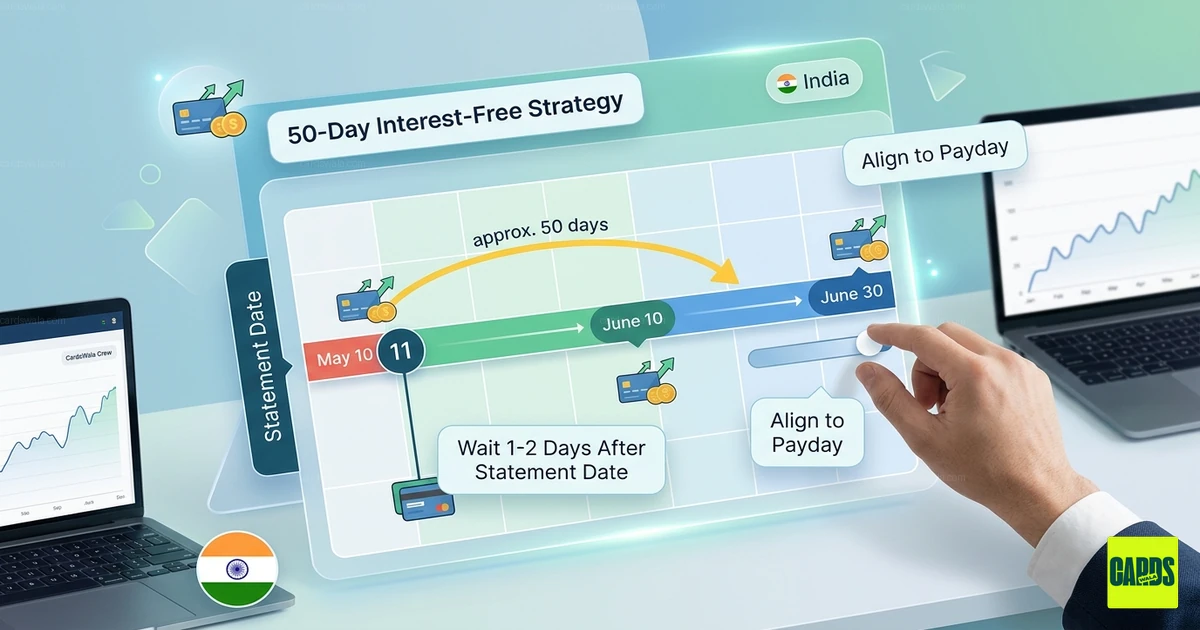
The secret to maximizing liquidity is timing your big-ticket purchases. Most cards offer an interest-free window of 45 to 50 days.
💡 The Pro Move: Make large purchases 1–2 days after your statement date.
If your statement generates on the 10th, wait until the 11th to buy that new gadget. That purchase won't appear on a bill until the next month, giving you the maximum possible time to pay it off without a paisa of interest.
3. 📉 The Statement Date Hack for Your CIBIL Score
Many don’t realize that banks report your balance to credit bureaus on your Statement Date, not your Due Date. If you have a ₹1 Lakh limit and spend ₹80,000, your utilization is 80%—which can pull your score down even if you pay it back fully later.
- 🛠️ The Fix: Pay down a significant portion of your balance three days before your statement closes. This ensures a low utilization ratio is reported to the bureaus, keeping your credit health "Excellent."
4. 💰 Align Cycles with Your Payday
If you have multiple cards with random due dates, it’s a recipe for a missed payment.
- 🔄 Standardize: Most issuers allow you to change your billing cycle date via their app or customer service. Move your due dates to 3–5 days after your monthly salary hits your account.
- 🎯 The Benefit: You’ll always have the maximum cash on hand when the bills are due, reducing the temptation to pay only the "Minimum Amount Due."
5. 💳 Multi-Card Rotation
If you hold multiple cards, don't use them interchangeably. Group them by their billing dates to bridge the gap:
- Card A: Statement on the 1st (Use for spends between the 1st and 15th).
- Card B: Statement on the 15th (Use for spends between the 15th and 30th).
By rotating cards this way, you ensure that every purchase you make always falls at the start of a fresh cycle.
⚠️ The Never-Fail Checklist
- 🚫 Avoid Rent Payments: Most issuers now levy a 1% fee plus GST on rent payments, and these often don't count toward reward milestones.
- 💸 The 18% Rule: Remember that any interest or late fees incurred also attract 18% GST, making credit card debt one of the most expensive ways to borrow.
- 🤖 Set Autopay: At the very least, automate the minimum payment to protect your credit history from accidental slips.
The Bottom Line: Your credit card is a tool, not a trap. By mastering the timing of your cycle, you are essentially using the bank's capital for free while building a golden credit profile.
Check Out These Cards

CardsWala Crew
Credit Card Expert & Financial Writer