💳 The Death of the Credit Card Debt Trap: How 2026 RBI Rules Protect Your Balance
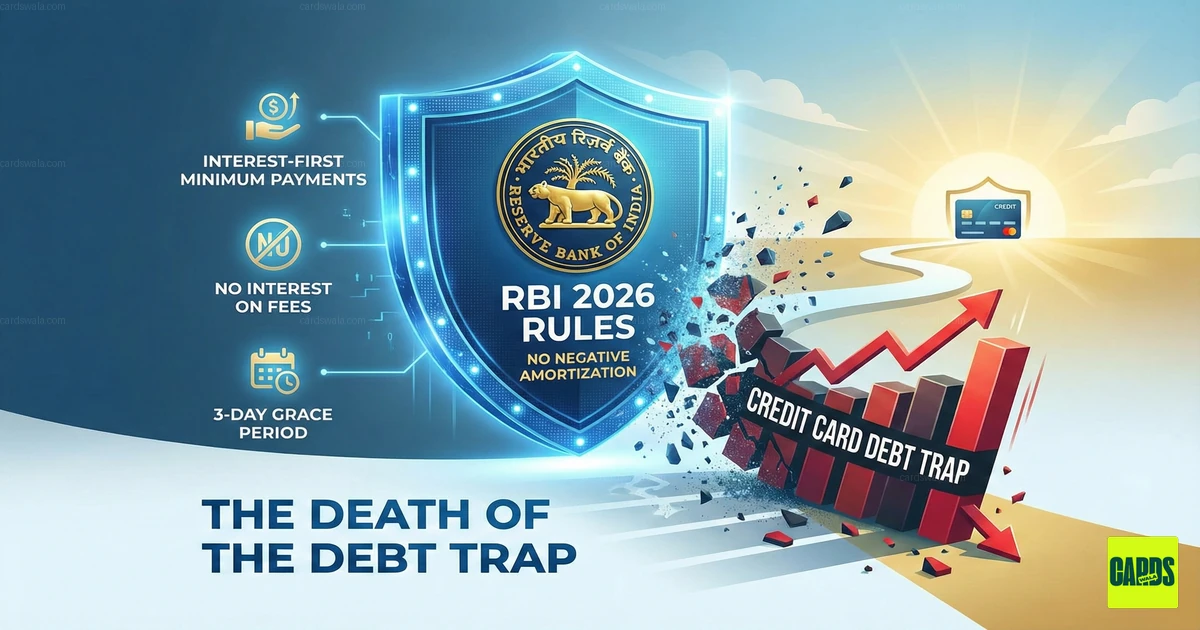
If you’ve ever felt like your credit card balance has a life of its own—growing even when you’re making payments—you’ve likely been a victim of Negative Amortization.
For years, the "Minimum Amount Due" (MAD) was a financial mirage. You paid it to stay in the bank's good books, but the debt kept snowballing. However, as of January 1, 2026, the Reserve Bank of India (RBI) has officially pulled the plug on these predatory cycles.
Here is how the new 2026 landscape protects your plastic and your pocket. 🛡️
🛑 What is "Negative Amortization" on a Card?
In simple terms: It’s when your monthly payment is smaller than the interest being charged.
- The Old Trap: You owe ₹50,000. Your interest is ₹2,000, but the bank sets your Minimum Due at ₹1,500.
- The Result: Even after paying, your debt increases by ₹500. You are essentially paying for the privilege of owing more money.
🛠️ The 2026 RBI Toolkit: 4 Rules That Change Everything
1. The "Interest-First" Minimum Payment 📈
The RBI now mandates that the Minimum Amount Due (MAD) can no longer be a random percentage (like the old 5% rule).
- The New Law: The MAD must cover 100% of the interest, 100% of all fees/taxes, and a portion of the principal.
- The Benefit: Your balance is mathematically guaranteed to stay flat or go down. It is now physically impossible for your debt to grow if you pay the minimum.
2. No "Compounding" on Fees & Taxes 🚫
Previously, if you missed a payment, banks would add the late fee and GST to your total balance and then charge interest on those fees. * The 2026 Shift: Interest can only be levied on the principal spend. Unpaid charges, levies, and taxes cannot be "capitalized" (added to the interest-bearing balance).
- The Benefit: This stops the "interest on interest" snowball that turns a small mistake into a lifetime of debt.
3. The 3-Day "Oops" Buffer ⏳
Late payment reporting to credit bureaus (like CIBIL) used to be instant.
- The New Protection: Banks must now offer a 3-day grace period after the due date before they can label you a "defaulter" or report you to credit bureaus.
- The Benefit: If you forget to pay on Friday but clear it by Sunday, your credit score remains untouched.
4. The "Payoff Warning" Mandate ⚠️
Your statement is no longer allowed to hide the truth. Every 2026 credit card statement must feature a repayment table showing:
- How many years/months it will take to pay off the balance if you only pay the minimum.
- The total interest you will end up paying.
Reality Check: Seeing "20 years to pay for this ₹10,000 dinner" is the wake-up call every borrower needs.
📊 2025 vs. 2026: A Quick Comparison
| Feature | The Old Way (Pre-2026) | The RBI 2026 Way |
|---|---|---|
| Minimum Payment | Often lower than monthly interest. | Must cover interest + fees + principal. |
| Balance Progress | Could increase (Negative Amortization). | Must decrease or stay flat. |
| Interest on Fees | Yes (Compounded). | Strictly Prohibited. |
| Credit Reporting | Immediate after 1 day. | 3-day grace period required. |
🚀 How to Use These Rules to Your Advantage
- Check your "Negative Amortization" Status: Look at your February 2026 statement. If your MAD has increased slightly, it's actually a good sign—it means the bank is following the new "Interest-First" rule to protect your principal.
- Review your APR: RBI now requires banks to show the Annual Percentage Rate (APR) clearly. If yours is above 40%, use the new Zero Foreclosure rules to take a personal loan at 12-14% and kill the card debt.
- Weekly CIBIL Tracking: Since 2026 updates are now weekly, pay off a chunk of debt and watch your credit score jump within 7 days instead of waiting a month!
The Bottom Line
The 2026 RBI rules don't make credit cards "cheap," but they do make them fair. They've removed the hidden math that kept millions of Indians in a cycle of eternal debt. You are no longer just a "source of interest"—you are a protected consumer.
Check Out These Cards
CardsWala Crew
Credit Card Expert & Financial Writer