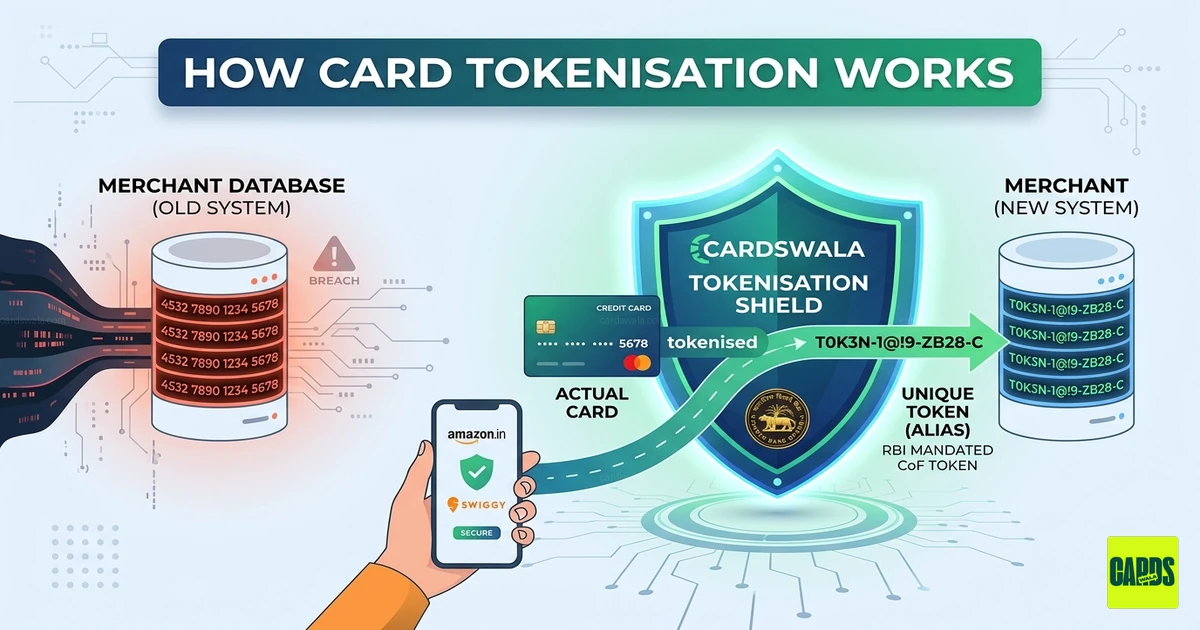
💳 ಕಾರ್ಡ್ ಟೋಕನೈಸೇಶನ್ ಹೇಗೆ ಕೆಲಸ ಮಾಡುತ್ತದೆ: ನಿಮ್ಮ ಕಾರ್ಡ್ ಸಂಖ್ಯೆಯನ್ನು ಮರ್ಚೆಂಟ್ಗಳು ಇನ್ನು ಏಕೆ ಸಂಗ್ರಹಿಸುವುದಿಲ್ಲ
ನೀವು ಇತ್ತೀಚೆಗೆ ಅಮೆಜಾನ್, ಸ್ವಿಗ್ಗಿ, ಝೊಮಾಟೊ ಅಥವಾ ಫ್ಲಿಪ್ಕಾರ್ಟ್ನಲ್ಲಿ ಶಾಪ್ ಮಾಡಿದ್ದರೆ, ನೀವು ವಿಭಿನ್ನವಾದದ್ದನ್ನು ಗಮನಿಸಿರಬಹುದು. ನಿಮ್ಮ "ಉಳಿಸಿದ ಕಾರ್ಡ್" ಅನ್ನು ನೀವು ನೋಡಬಹುದು, ಆದರೆ ಮರ್ಚೆಂಟ್ ಇನ್ನು ನಿಮ್ಮ ನಿಜವಾದ 16-ಅಂಕಿಯ ಕಾರ್ಡ್ ಸಂಖ್ಯೆಯನ್ನು ತೋರಿಸುವುದಿಲ್ಲ - ಅಥವಾ ಸಂಗ್ರಹಿಸುವುದಿಲ್ಲ.
ಇದು ತಾಂತ್ರಿಕ ಗ್ಲಿಚ್ ಅಲ್ಲ; ಇದು ರಿಸರ್ವ್ ಬ್ಯಾಂಕ್ ಆಫ್ ಇಂಡಿಯಾ (ಆರ್ಬಿಐ) ಕಡ್ಡಾಯಗೊಳಿಸಿದ ಕಾರ್ಡ್-ಆನ್-ಫೈಲ್ (CoF) ಟೋಕನೈಸೇಶನ್ ಎಂಬ ಬೃಹತ್ ಭದ್ರತಾ ಅಪ್ಗ್ರೇಡ್ ಆಗಿದೆ.
🛡️ ಟೋಕನೈಸೇಶನ್ ಎಂದರೇನು?
ಸರಳ ಪದಗಳಲ್ಲಿ, ಟೋಕನೈಸೇಶನ್ ಎನ್ನುವುದು ನಿಮ್ಮ ಸೂಕ್ಷ್ಮ 16-ಅಂಕಿಯ ಕಾರ್ಡ್ ಸಂಖ್ಯೆಯನ್ನು "ಟೋಕನ್" ಎಂದು ಕರೆಯಲ್ಪಡುವ ವಿಶಿಷ್ಟ, ಯಾದೃಚ್ಛಿಕ ಕೋಡ್ನೊಂದಿಗೆ ಬದಲಾಯಿಸುವ ಪ್ರಕ್ರಿಯೆ. ಇದನ್ನು ಡಿಜಿಟಲ್ ಅಲಿಯಾಸ್ ಎಂದು ಯೋಚಿಸಿ. ನೀವು ನಿಮ್ಮ ಭೋಜನ ಅಥವಾ ಹೊಸ ಜೊತೆ ಶೂಗಳಿಗೆ ಪಾವತಿಸಿದಾಗ, ಈ ಟೋಕನ್ ಅನ್ನು ವಹಿವಾಟನ್ನು ಪ್ರಕ್ರಿಯೆಗೊಳಿಸಲು ಬಳಸಲಾಗುತ್ತದೆ. ನಿಮ್ಮ ನಿಜವಾದ ಕಾರ್ಡ್ ವಿವರಗಳು ನಿಮ್ಮ ಬ್ಯಾಂಕ್ ಅಥವಾ ಕಾರ್ಡ್ ನೆಟ್ವರ್ಕ್ (ವೀಸಾ, ಮಾಸ್ಟರ್ಕಾರ್ಡ್ ಅಥವಾ ರೂಪೇ) ನ ಹೆಚ್ಚು ಸುರಕ್ಷಿತ ವಾಲ್ಟ್ಗಳಲ್ಲಿ ಲಾಕ್ ಆಗಿರುತ್ತವೆ.
⚙️ ಇದು ಹೇಗೆ ಕೆಲಸ ಮಾಡುತ್ತದೆ: ಹಂತ-ಹಂತದ ಪ್ರಕ್ರಿಯೆ
ನೀವು ಭಾರತೀಯ ಶಾಪಿಂಗ್ ಅಪ್ಲಿಕೇಶನ್ನಲ್ಲಿ "ಸುರಕ್ಷಿತವಾಗಿ ನಿಮ್ಮ ಕಾರ್ಡ್ ಅನ್ನು ಉಳಿಸಿ" ಎಂದು ಆಯ್ಕೆ ಮಾಡಿದಾಗ, ತೆರೆಮರೆಯಲ್ಲಿ ಏನಾಗುತ್ತದೆ ಎಂಬುದು ಇಲ್ಲಿದೆ:
- ✅ ಬಳಕೆದಾರರ ಒಪ್ಪಿಗೆ: ನಿಮ್ಮ ಕಾರ್ಡ್ ಅನ್ನು ಉಳಿಸಲು ನೀವು ಅಪ್ಲಿಕೇಶನ್ಗೆ ಅನುಮತಿ ನೀಡುತ್ತೀರಿ. ನೀವು ಸಾಮಾನ್ಯವಾಗಿ ಚೆಕ್ಬಾಕ್ಸ್ ಅನ್ನು ನೋಡುತ್ತೀರಿ: "RBI ಮಾರ್ಗಸೂಚಿಗಳ ಪ್ರಕಾರ ಕಾರ್ಡ್ ಅನ್ನು ಸುರಕ್ಷಿತವಾಗಿ ಉಳಿಸಿ."
- 📱 ದೃಢೀಕರಣ: ನೀವು ನಿಮ್ಮ CVV ಅನ್ನು ನಮೂದಿಸಿ ಹೆಚ್ಚುವರಿ ಅಂಶದ ದೃಢೀಕರಣವನ್ನು (AFA) ಪೂರ್ಣಗೊಳಿಸುತ್ತೀರಿ - ಸಾಮಾನ್ಯವಾಗಿ ನಿಮ್ಮ ಫೋನ್ಗೆ ಕಳುಹಿಸಲಾದ OTP.
- 🔢 ಟೋಕನ್ ರಚನೆ: ನಿಮ್ಮ ಕಾರ್ಡ್ ಸಂಖ್ಯೆಯನ್ನು ಉಳಿಸುವ ಬದಲು, ಮರ್ಚೆಂಟ್ ಕಾರ್ಡ್ ನೆಟ್ವರ್ಕ್ಗೆ (ವೀಸಾ, ಮಾಸ್ಟರ್ಕಾರ್ಡ್, ರೂಪೇ) ವಿಶಿಷ್ಟ ಟೋಕನ್ ಅನ್ನು ರಚಿಸಲು ಕೇಳುತ್ತದೆ.
- 🔗 ವಿಶಿಷ್ಟ ಮ್ಯಾಪಿಂಗ್: ಈ ಟೋಕನ್ ಡಿ-ಕಪಲ್ಡ್ ಆಗಿದೆ. ಇದು ಕೇವಲ ಕೆಲಸ ಮಾಡುತ್ತದೆ:
- ಆ ನಿರ್ದಿಷ್ಟ ಮರ್ಚೆಂಟ್ (ಉದಾ., ಅಮೆಜಾನ್ನಲ್ಲಿ ಮಾತ್ರ)
- ಆ ನಿರ್ದಿಷ್ಟ ಸಾಧನ (ಉದಾ., ನಿಮ್ಮ ಫೋನ್ ಮಾತ್ರ)
- ಆ ನಿರ್ದಿಷ್ಟ ಕಾರ್ಡ್
🚀 ಇದು ಏಕೆ ಮುಖ್ಯ: "ಸುರಕ್ಷತೆ ಮೊದಲು" ವಿಧಾನ
ಟೋಕನೈಸೇಶನ್ಗೆ ಮೊದಲು, ನೀವು "ಉಳಿಸಿದ" ಪ್ರತಿ ವೆಬ್ಸೈಟ್ ನಿಮ್ಮ 16-ಅಂಕಿಯ ಸಂಖ್ಯೆ ಮತ್ತು ಮುಕ್ತಾಯ ದಿನಾಂಕವನ್ನು ಸಂಗ್ರಹಿಸಿತು. ಆ ಮರ್ಚೆಂಟ್ನ ಸರ್ವರ್ ಹ್ಯಾಕ್ ಆದರೆ, ನಿಮ್ಮ ನಿಜವಾದ ಕಾರ್ಡ್ ವಿವರಗಳು ಹ್ಯಾಕರ್ಗಳಿಗೆ "ಲೀಕ್" ಆಗುತ್ತಿದ್ದವು.
ಟೋಕನೈಸೇಶನ್ನೊಂದಿಗೆ:
- 🚫 ಸೂಕ್ಷ್ಮ ಡೇಟಾ ಅಪಾಯದಲ್ಲಿಲ್ಲ: ಮರ್ಚೆಂಟ್ನ ಡೇಟಾಬೇಸ್ ಉಲ್ಲಂಘನೆಯಾದರೂ, ಹ್ಯಾಕರ್ಗಳು "ಟೋಕನ್ಗಳನ್ನು" ಮಾತ್ರ ಕಂಡುಕೊಳ್ಳುತ್ತಾರೆ. ಇವು ಬೇರೆಲ್ಲಿಯೂ ಬಳಸಲಾಗದ ಅರ್ಥಹೀನ ಸಂಖ್ಯೆಗಳ ಸ್ಟ್ರಿಂಗ್ಗಳು.
- 📉 "ಕಾರ್ಡ್ ಕ್ಲೋನಿಂಗ್" ಅಂತ್ಯ: ಟೋಕನ್ ನಿರ್ದಿಷ್ಟ ಮರ್ಚೆಂಟ್ ಮತ್ತು ಸಾಧನಕ್ಕೆ ಲಾಕ್ ಆಗಿರುವುದರಿಂದ, ಇತರ ಪ್ಲಾಟ್ಫಾರ್ಮ್ಗಳಲ್ಲಿ ಅನಧಿಕೃತ ವಹಿವಾಟುಗಳಿಗೆ ಇದು ನಿಷ್ಪ್ರಯೋಜಕವಾಗಿದೆ.
- ⚡ ಅನುಕೂಲತೆ ಕಾಪಾಡಿಕೊಳ್ಳಲಾಗಿದೆ: ಇಪ್ಪತ್ತು ವಿಭಿನ್ನ ವೆಬ್ಸೈಟ್ಗಳಲ್ಲಿ ನಿಮ್ಮ ಡೇಟಾವನ್ನು ಬಿಟ್ಟು ಹೋಗುವ ಆತಂಕವಿಲ್ಲದೆ ನೀವು ಇನ್ನೂ "ಒನ್-ಕ್ಲಿಕ್" ಚೆಕ್ಔಟ್ ಅನುಭವವನ್ನು ಆನಂದಿಸುತ್ತೀರಿ.
📅 2026 ಭೂದೃಶ್ಯ: ಹೊಸದೇನು?
2026 ರ ಹೊತ್ತಿಗೆ, ಆರ್ಬಿಐ ಡಿಜಿಟಲ್ ವಂಚನೆಗೆ ತಕ್ಕಂತೆ ಈ ನಿಯಮಗಳನ್ನು ಮತ್ತಷ್ಟು ವಿಕಸನಗೊಳಿಸಿದೆ:
- ಬಯೋಮೆಟ್ರಿಕ್ ಏಕೀಕರಣ: ಅನೇಕ ಭಾರತೀಯ ಬ್ಯಾಂಕ್ಗಳು ಈಗ ಟೋಕನೈಸ್ಡ್ ಪಾವತಿಯನ್ನು ಅಧಿಕೃತಗೊಳಿಸಲು ಫಿಂಗರ್ಪ್ರಿಂಟ್ ಅಥವಾ ಫೇಸ್ ID ಅನ್ನು ಬಳಸಲು ನಿಮಗೆ ಅನುವು ಮಾಡಿಕೊಡುತ್ತವೆ, SMS OTP ಗಾಗಿ ಕಾಯುವುದಕ್ಕಿಂತ ವೇಗವಾಗಿ.
- ಟೋಕನ್ ನಿಯಂತ್ರಣ: ನೀವು ಈಗ "ಮಾಸ್ಟರ್ ಸ್ವಿಚ್" ಹೊಂದಿದ್ದೀರಿ. ನಿಮ್ಮ ಬ್ಯಾಂಕ್ನ ಮೊಬೈಲ್ ಅಪ್ಲಿಕೇಶನ್ಗೆ ಲಾಗಿನ್ ಮಾಡಿ ಮತ್ತು ನೀವು ಟೋಕನ್ ಹೊಂದಿರುವ ಪ್ರತಿ ಮರ್ಚೆಂಟ್ನ ಪಟ್ಟಿಯನ್ನು ನೋಡಬಹುದು. ನೀವು ಅವುಗಳನ್ನು ಒಂದು ಟ್ಯಾಪ್ನಲ್ಲಿ ಅಳಿಸಬಹುದು.
📌 ಭಾರತೀಯ ಶಾಪರ್ಗೆ ಪ್ರಮುಖ ಟೇಕ್ಅವೇಗಳು
- 💰 ಇದು ಉಚಿತ: ನಿಮ್ಮ ಕಾರ್ಡ್ ಅನ್ನು ಟೋಕನೈಸ್ ಮಾಡಲು ಯಾವುದೇ ಶುಲ್ಕವಿಲ್ಲ.
- 🙋 ಇದು ಐಚ್ಛಿಕ: ನೀವು ಟೋಕನೈಸ್ ಮಾಡದಿರಲು ಆಯ್ಕೆ ಮಾಡಬಹುದು, ಆದರೆ ಪ್ರತಿ ಖರೀದಿಗೆ ನಿಮ್ಮ 16-ಅಂಕಿಯ ಸಂಖ್ಯೆ, ಮುಕ್ತಾಯ ದಿನಾಂಕ ಮತ್ತು CVV ಅನ್ನು ಹಸ್ತಚಾಲಿತವಾಗಿ ಟೈಪ್ ಮಾಡಬೇಕಾಗುತ್ತದೆ.
- 🛡️ ವರ್ಧಿತ ಗೌಪ್ಯತೆ: ಮರ್ಚೆಂಟ್ಗಳು ಇನ್ನು ನಿಮ್ಮ ಕಾರ್ಡ್ ಸಂಖ್ಯೆಯನ್ನು ಸಾಮಾನ್ಯ ಗುರುತಿಸುವಿಕೆಯಾಗಿ ಬಳಸಿಕೊಂಡು ವಿಭಿನ್ನ ಪ್ಲಾಟ್ಫಾರ್ಮ್ಗಳಲ್ಲಿ ನಿಮ್ಮ ಖರ್ಚನ್ನು ಟ್ರ್ಯಾಕ್ ಮಾಡಲು ಸಾಧ್ಯವಿಲ್ಲ.
ಬಾಟಮ್ ಲೈನ್: ಮುಂದಿನ ಬಾರಿ ನೀವು ಆ "ಸುರಕ್ಷಿತವಾಗಿ ಕಾರ್ಡ್ ಉಳಿಸಿ" ಪ್ರಾಂಪ್ಟ್ ಅನ್ನು ನೋಡಿದಾಗ, ಕ್ಲಿಕ್ ಮಾಡಿ. ನೀವು ಕೇವಲ ಸಮಯವನ್ನು ಉಳಿಸುತ್ತಿಲ್ಲ; ನಿಮ್ಮ ಕಷ್ಟಪಟ್ಟು ಗಳಿಸಿದ ಹಣದ ಸುತ್ತ ಡಿಜಿಟಲ್ ಗುರಾಣಿಯನ್ನು ನಿರ್ಮಿಸುತ್ತಿದ್ದೀರಿ. 🇮🇳✨
ಈ ಕಾರ್ಡ್ಗಳನ್ನು ನೋಡಿ
CardsWala Crew
ಕ್ರೆಡಿಟ್ ಕಾರ್ಡ್ ತಜ್ಞ ಮತ್ತು ಹಣಕಾಸು ಬರಹಗಾರ