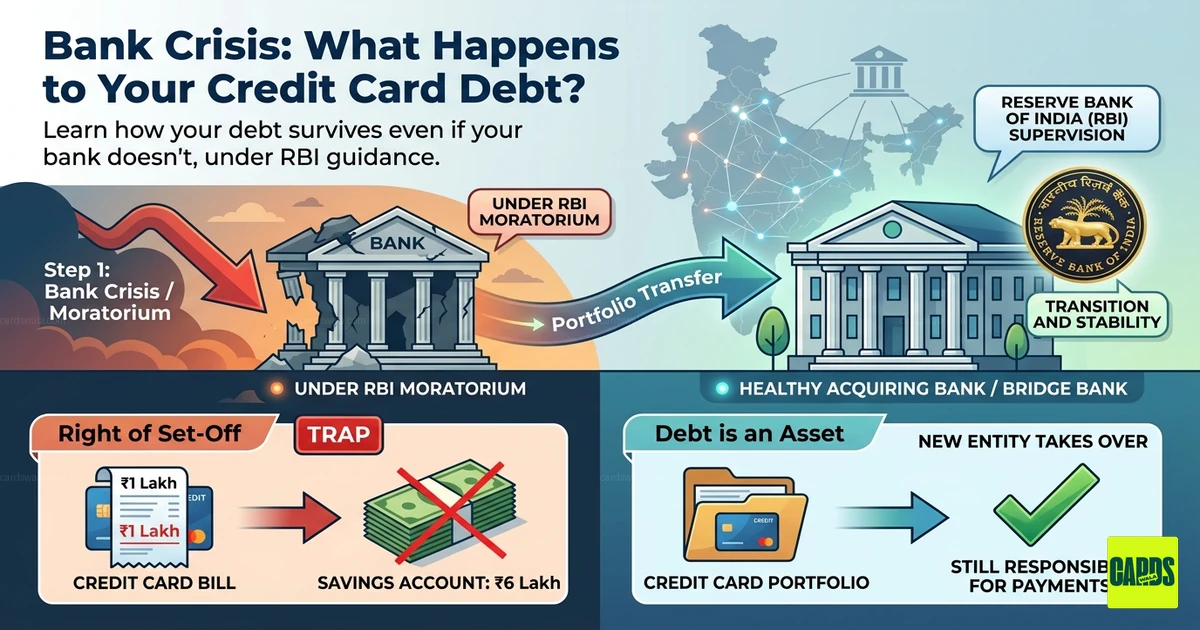
ಬ್ಯಾಂಕ್ ಬಿಕ್ಕಟ್ಟು: ನಿಮ್ಮ ಕ್ರೆಡಿಟ್ ಕಾರ್ಡ್ ಸಾಲಕ್ಕೆ ಏನಾಗುತ್ತದೆ? 💳📉
ಭಾರತೀಯ ಬ್ಯಾಂಕ್ "ಮುಳುಗಿದಾಗ" ಅಥವಾ ರಿಸರ್ವ್ ಬ್ಯಾಂಕ್ ಆಫ್ ಇಂಡಿಯಾ (ಆರ್ಬಿಐ) ನಿಂದ ಮೊರಟೋರಿಯಂ ಅಡಿಯಲ್ಲಿ ಇರಿಸಲ್ಪಟ್ಟ ಅಪರೂಪದ ಘಟನೆಯಲ್ಲಿ, ಠೇವಣಿದಾರರು ತಮ್ಮ ಉಳಿತಾಯದ ಬಗ್ಗೆ ಪ್ಯಾನಿಕ್ ಆಗುತ್ತಾರೆ. ಆದರೆ ಕ್ರೆಡಿಟ್ ಕಾರ್ಡ್ ಹೊಂದಿರುವವರಿಗೆ, ಪ್ರತಿಕ್ರಿಯೆಯು ಹೆಚ್ಚಾಗಿ: "ಬ್ಯಾಂಕ್ ಹೋದರೆ, ಬಹುಶಃ ನನ್ನ ಸಾಲವೂ ಹೋಗುತ್ತದೆಯೇ?"
ಸಂಕ್ಷಿಪ್ತ ಉತ್ತರ: ಇಲ್ಲ. ವಾಸ್ತವವಾಗಿ, ಬ್ಯಾಂಕ್ ವೈಫಲ್ಯದ ಸಮಯದಲ್ಲಿ ನಿಮ್ಮ ಕ್ರೆಡಿಟ್ ಕಾರ್ಡ್ ಅನ್ನು ನಿರ್ವಹಿಸಲು ದೀರ್ಘಾವಧಿಯ ಹಣಕಾಸಿನ ದುಃಸ್ವಪ್ನವನ್ನು ತಪ್ಪಿಸಲು ಇನ್ನೂ ಹೆಚ್ಚಿನ ಎಚ್ಚರಿಕೆಯ ಅಗತ್ಯವಿದೆ. ಭಾರತದಲ್ಲಿ ಬ್ಯಾಂಕ್ ಬಿಕ್ಕಟ್ಟಿನಲ್ಲಿ ಕ್ರೆಡಿಟ್ ಕಾರ್ಡ್ ಸೆಟಲ್ಮೆಂಟ್ಗಳು ಮತ್ತು ಬಾಕಿಗಳು ಹೇಗೆ ಕೆಲಸ ಮಾಡುತ್ತವೆ ಎಂಬುದು ಇಲ್ಲಿದೆ.
1. ನಿಮ್ಮ ಸಾಲವು "ಆಸ್ತಿ" (ಬೇರೆಯವರಿಗೆ) 📂
ಬ್ಯಾಂಕ್ನ ಭೌತಿಕ ಬಾಗಿಲುಗಳು ಲಾಕ್ ಆಗಿದ್ದರೂ, ನಿಮ್ಮ ಕ್ರೆಡಿಟ್ ಕಾರ್ಡ್ ಬ್ಯಾಲೆನ್ಸ್ ಕಣ್ಮರೆಯಾಗುವುದಿಲ್ಲ. ಕಾನೂನುಬದ್ಧವಾಗಿ, ನಿಮ್ಮ ಸಾಲವು ಸ್ವೀಕರಿಸಬಹುದಾದ ಆಸ್ತಿ.
- ಪರಿವರ್ತನೆ: ಬ್ಯಾಂಕ್ ಲಿಕ್ವಿಡೇಟ್ ಆದರೆ ಅಥವಾ ವಿಲೀನಗೊಂಡರೆ (ಲಕ್ಷ್ಮಿ ವಿಲಾಸ್ ಬ್ಯಾಂಕ್ ಅಥವಾ ಯೆಸ್ ಬ್ಯಾಂಕ್ ಬಿಕ್ಕಟ್ಟುಗಳಂತೆ), ನಿಮ್ಮ ಸಾಲ/ಕ್ರೆಡಿಟ್ ಕಾರ್ಡ್ ಪೋರ್ಟ್ಫೋಲಿಯೊವನ್ನು ಸಾಮಾನ್ಯವಾಗಿ "ಬ್ರಿಜ್ ಬ್ಯಾಂಕ್" ಅಥವಾ ಆರೋಗ್ಯಕರ ಸ್ವಾಧೀನಪಡಿಸಿಕೊಳ್ಳುವ ಬ್ಯಾಂಕ್ಗೆ ವರ್ಗಾಯಿಸಲಾಗುತ್ತದೆ. 🏦
- ಜವಾಬ್ದಾರಿ: ನೀವು ಇನ್ನೂ ಆ ಹಣವನ್ನು ಬಾಕಿ ಇದ್ದೀರಿ. ನಿಮ್ಮ ಪಾವತಿಗಳನ್ನು ಎಲ್ಲಿ ನಿರ್ದೇಶಿಸಬೇಕು ಎಂಬುದರ ಕುರಿತು ನೀವು ಅಂತಿಮವಾಗಿ ಸೂಚನೆಗಳನ್ನು ಸ್ವೀಕರಿಸುತ್ತೀರಿ. ಅವುಗಳನ್ನು ನಿರ್ಲಕ್ಷಿಸುವುದು ಹೊಸ ಘಟಕದಿಂದ ಕಾನೂನು ಕ್ರಮಕ್ಕೆ ಕಾರಣವಾಗಬಹುದು. ⚖️
2. DICGC ನಿಯಮ: "ಸೆಟ್-ಆಫ್" ಬಲೆ 🪤
ಡೆಪಾಸಿಟ್ ಇನ್ಶೂರೆನ್ಸ್ ಮತ್ತು ಕ್ರೆಡಿಟ್ ಗ್ಯಾರಂಟಿ ಕಾರ್ಪೊರೇಷನ್ (DICGC) ನಿಮ್ಮ ಠೇವಣಿಗಳನ್ನು ₹5 ಲಕ್ಷ ವರೆಗೆ ವಿಮೆ ಮಾಡುತ್ತದೆ. ಆದಾಗ್ಯೂ, ರೈಟ್ ಆಫ್ ಸೆಟ್-ಆಫ್ ಎಂದು ಕರೆಯಲ್ಪಡುವ ಕಾನೂನು ತಂತ್ರವಿದೆ.
ನೀವು ಅದೇ ವಿಫಲ ಬ್ಯಾಂಕ್ನಲ್ಲಿ ಉಳಿತಾಯ ಖಾತೆಯಲ್ಲಿ ₹6 ಲಕ್ಷ ಮತ್ತು ₹1 ಲಕ್ಷ ಕ್ರೆಡಿಟ್ ಕಾರ್ಡ್ ಬಿಲ್ ಹೊಂದಿದ್ದರೆ:
- ಬ್ಯಾಂಕ್ ನಿಮ್ಮ ಸಾಲವನ್ನು ನಿಮ್ಮ ಠೇವಣಿಗೆ ವಿರುದ್ಧ "ಸೆಟ್ ಆಫ್" ಮಾಡುವ ಹಕ್ಕನ್ನು ಹೊಂದಿದೆ.
- ನಿಮ್ಮ ಪೂರ್ಣ ವಿಮಾ ಮೊತ್ತವನ್ನು ಪಡೆಯುವ ಬದಲು, ಬ್ಯಾಂಕ್ ಮೊದಲು ನಿಮ್ಮ ಕ್ರೆಡಿಟ್ ಕಾರ್ಡ್ ಬಾಕಿಯನ್ನು ಕಡಿತಗೊಳಿಸಬಹುದು.
- ಪರಿಣಾಮ: ನೀವು ₹5 ಲಕ್ಷ (ವಿಮಾ ಮಿತಿ) ಸ್ವೀಕರಿಸುತ್ತೀರಿ, ಮತ್ತು ನಿಮ್ಮ ₹1 ಲಕ್ಷ ಸಾಲವು ನಿಮ್ಮ ಸ್ವಂತ ಸಿಕ್ಕಿಬಿದ್ದ ಉಳಿತಾಯವನ್ನು ಬಳಸಿಕೊಂಡು "ಸೆಟಲ್" ಆಗುತ್ತದೆ. 💸
3. ನೀವು ಸೆಟಲ್ಮೆಂಟ್ ಅನ್ನು ಮಾತುಕತೆ ಮಾಡಬಹುದೇ? 🤝
ಬ್ಯಾಂಕ್ ಮುಚ್ಚುವ ಪ್ರಕ್ರಿಯೆಯಲ್ಲಿದ್ದರೆ, ನೀವು "ಸೆಟಲ್ಮೆಂಟ್" (ನೀವು ಬಾಕಿ ಇರುವದಕ್ಕಿಂತ ಕಡಿಮೆ ಪಾವತಿಸುವುದು) ಕೇಳಲು ಪ್ರಚೋದಿಸಬಹುದು.
- ಒನ್-ಟೈಮ್ ಸೆಟಲ್ಮೆಂಟ್ಗಳು (OTS): ಲಿಕ್ವಿಡೇಟರ್ಗಳು ಠೇವಣಿದಾರರಿಗೆ ಹಣವನ್ನು ತ್ವರಿತವಾಗಿ ಮರುಪಡೆಯಲು ಬಯಸುತ್ತಾರೆ. ಪುಸ್ತಕಗಳನ್ನು ಕ್ಲಿಯರ್ ಮಾಡಲು ಅವರು OTS ಅನ್ನು ನೀಡಬಹುದು. 📉
- ಸಿಬಿಲ್ ಕ್ಯಾಚ್: ಬ್ಯಾಂಕ್ ವೈಫಲ್ಯದ ಸಮಯದಲ್ಲಿಯೂ, ಸೆಟಲ್ಮೆಂಟ್ ಅನ್ನು ಕ್ರೆಡಿಟ್ ಬ್ಯೂರೋಗಳಿಗೆ ವರದಿ ಮಾಡಲಾಗುತ್ತದೆ. ನಿಮ್ಮ ವರದಿಯು "ಸೆಟಲ್ಡ್" ಎಂದು ತೋರಿಸುತ್ತದೆ, "ಕ್ಲೋಸ್ಡ್" ಅಲ್ಲ, ಇದು 7 ವರ್ಷಗಳವರೆಗೆ ನಿಮ್ಮ ಕ್ರೆಡಿಟ್ ಸ್ಕೋರ್ ಅನ್ನು ಕುಸಿಯಬಹುದು. 📉🚫
4. ನಿಮ್ಮ ರಿವಾರ್ಡ್ಗಳು ಮತ್ತು ಪ್ರಯೋಜನಗಳಿಗೆ ಏನಾಗುತ್ತದೆ? 🎁
ಇಲ್ಲಿ ಕಾರ್ಡ್ದಾರರು ಸಾಮಾನ್ಯವಾಗಿ ಹೆಚ್ಚು ಕಳೆದುಕೊಳ್ಳುತ್ತಾರೆ.
- ರಿವಾರ್ಡ್ ಪಾಯಿಂಟ್ಗಳು: ಬ್ಯಾಂಕ್ನ ಕಾರ್ಯಾಚರಣೆಗಳನ್ನು ಅಮಾನತುಗೊಳಿಸಿದರೆ, ನಿಮ್ಮ ರಿವಾರ್ಡ್ ಪಾಯಿಂಟ್ಗಳು ತಕ್ಷಣ ನಿಷ್ಪ್ರಯೋಜಕವಾಗುತ್ತವೆ. ಅವುಗಳನ್ನು ಬಳಸಿ ಅಥವಾ ಕಳೆದುಕೊಳ್ಳಿ! 🎟️
- ರೀಫಂಡ್ಗಳು/ಚಾರ್ಜ್ಬ್ಯಾಕ್ಗಳು: ರದ್ದಾದ ಫ್ಲೈಟ್ ಅಥವಾ ವಿವಾದಿತ ವಹಿವಾಟಿಗೆ ರೀಫಂಡ್ ಅನ್ನು ನೀವು ನಿರೀಕ್ಷಿಸುತ್ತಿದ್ದರೆ, ಪ್ರಕ್ರಿಯೆಯು ತಿಂಗಳುಗಳು ಅಥವಾ ವರ್ಷಗಳನ್ನು ತೆಗೆದುಕೊಳ್ಳಬಹುದಾದ ಅಧಿಕಾರಶಾಹಿ ದುಃಸ್ವಪ್ನವಾಗುತ್ತದೆ. ⏳
⚠️ ಭಾರತದಲ್ಲಿ ಕ್ರೆಡಿಟ್ ಕಾರ್ಡ್ ಬಳಕೆದಾರರಿಗೆ ಪ್ರೊ-ಟಿಪ್ಸ್
- ಪಾವತಿಸುವುದನ್ನು ನಿಲ್ಲಿಸಬೇಡಿ: ಮೊಬೈಲ್ ಅಪ್ಲಿಕೇಶನ್ ಡೌನ್ ಆಗಿದ್ದರೂ, ಪಾವತಿಸಲು ನಿಮ್ಮ ಪ್ರಯತ್ನಗಳ ದಾಖಲೆಗಳನ್ನು ಇರಿಸಿ. ಪಾವತಿಸದ ಬಡ್ಡಿ ಮತ್ತು ದಂಡಗಳು ಸಂಗ್ರಹವಾಗುತ್ತಲೇ ಇರುತ್ತವೆ. 📈
- NOC ಪಡೆಯಿರಿ: ನೀವು ಸೆಟಲ್ಮೆಂಟ್ ತಲುಪಿದರೆ, ಭೌತಿಕ ನೋ ಅಬ್ಜೆಕ್ಷನ್ ಪ್ರಮಾಣಪತ್ರ (NOC) ಪಡೆಯುವುದನ್ನು ಖಚಿತಪಡಿಸಿಕೊಳ್ಳಿ. ಬ್ಯಾಂಕ್ ಮುಚ್ಚುವಿಕೆಯ ಗೊಂದಲದಲ್ಲಿ, ಡಿಜಿಟಲ್ ದಾಖಲೆಗಳು ಗೊಂದಲಮಯವಾಗಬಹುದು. 📄
- ನಿಮ್ಮ ಬ್ಯಾಂಕ್ಗಳನ್ನು ವೈವಿಧ್ಯಗೊಳಿಸಿ: ನಿಮ್ಮ ಪ್ರಾಥಮಿಕ ಉಳಿತಾಯ ಖಾತೆ ಮತ್ತು ನಿಮ್ಮ ಪ್ರಾಥಮಿಕ ಕ್ರೆಡಿಟ್ ಕಾರ್ಡ್ ಅನ್ನು ಒಂದೇ ಬ್ಯಾಂಕ್ನಲ್ಲಿ ಎಂದಿಗೂ ಇರಿಸಬೇಡಿ. ಇದು "ಸೆಟ್-ಆಫ್" ನಿಮ್ಮ ಸಂಪೂರ್ಣ ಹಣಕಾಸಿನ ಜೀವನವನ್ನು ಫ್ರೀಜ್ ಮಾಡುವುದನ್ನು ತಡೆಯುತ್ತದೆ. 🛡️
ಬಾಟಮ್ ಲೈನ್ 🎯
ಬ್ಯಾಂಕ್ ವೈಫಲ್ಯವು "ಸಾಲದಿಂದ ಮುಕ್ತರಾಗಿ" ಕಾರ್ಡ್ ಅಲ್ಲ. ಬ್ಯಾಂಕ್ನ ಭವಿಷ್ಯವು ಅನಿಶ್ಚಿತವಾಗಿರಬಹುದಾದರೂ, ಆರ್ಬಿಐನ ಚೇತರಿಕೆ ಕಾರ್ಯವಿಧಾನವು ನಂಬಲಾಗದಷ್ಟು ದೃಢವಾಗಿದೆ. ನಿಮ್ಮ ಕ್ರೆಡಿಟ್ ಕಾರ್ಡ್ ಬಾಕಿಗಳನ್ನು ಆದ್ಯತೆಯಾಗಿ ಪರಿಗಣಿಸಿ, ಏಕೆಂದರೆ ಬ್ಯಾಂಕ್ ಕಣ್ಮರೆಯಾಗಬಹುದಾದರೂ, ನಿಮ್ಮ ಸಿಬಿಲ್ ಸ್ಕೋರ್ ಶಾಶ್ವತವಾಗಿದೆ.
ಈ ಕಾರ್ಡ್ಗಳನ್ನು ನೋಡಿ
CardsWala Crew
ಕ್ರೆಡಿಟ್ ಕಾರ್ಡ್ ತಜ್ಞ ಮತ್ತು ಹಣಕಾಸು ಬರಹಗಾರ