💳 கிரெடிட் கார்டு பொறிகள்: நெகட்டிவ் அமார்டைசேஷன் என்றால் என்ன, ஏன் RBI தலையிட்டது?
உங்கள் கிரெடிட் கார்டு ஸ்டேட்மெண்டைப் பார்த்து, "Minimum Amount Due" செலுத்தியும் பேலன்ஸ் ஏன் குறையவில்லை என்று யோசித்திருக்கிறீர்களா — நீங்கள் ஒரு நிதி அரக்கனை சந்தித்திருக்கிறீர்கள்.
வங்கி உலகில், இது Negative Amortization என்று அழைக்கப்படுகிறது. சிக்கலான ஜார்கனாகத் தோன்றினாலும், இது உண்மையில் வாழ்நாள் கடனுக்கு வழிவகுக்கும் எளிய (மற்றும் ஆபத்தான) கணிதப் பிரச்சனை. இது என்ன, ஏன் ரிசர்வ் வங்கி (RBI) இதைத் தடை செய்தது, அது உங்கள் பணப்பையை எவ்வாறு பாதிக்கிறது என்பதற்கான விளக்கம் இங்கே.
🧐 நெகட்டிவ் அமார்டைசேஷன் என்றால் என்ன?
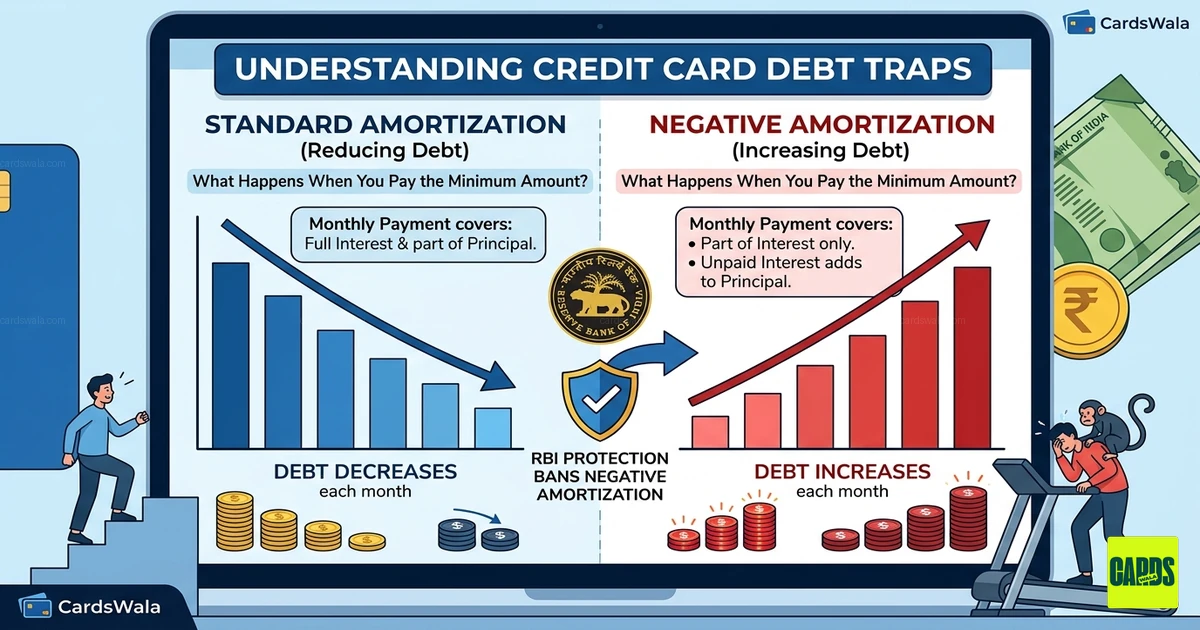
"நெகட்டிவ்" அமார்டைசேஷனைப் புரிந்து கொள்ள, முதலில் Amortization-ஐப் பார்ப்போம். பொதுவாக, நீங்கள் கடனைத் திருப்பிச் செலுத்தும்போது, உங்கள் பேமெண்ட் அந்த மாதத்திற்கான வட்டி மற்றும் கொஞ்சம் அசலை உள்ளடக்கும். காலப்போக்கில், உங்கள் கடன் பூஜ்ஜியத்தை அடையும் வரை குறையும். 📉
நெகட்டிவ் அமார்டைசேஷன் என்பது உங்கள் மாதாந்திர பேமெண்ட் மிகவும் குறைவாக இருப்பதால் நீங்கள் செலுத்த வேண்டிய வட்டியைக் கூட ஈடு செய்யாத நிலை.
🧮 கணிதம் எப்படி வேலை செய்கிறது
உங்கள் கார்டில் ₹1,00,000 கடன் மற்றும் மாதாந்திர வட்டி ₹3,000 என்று வைத்துக் கொள்வோம்.
- சூழ்நிலை: உங்கள் வங்கி "Minimum Amount Due" ஐ வெறும் ₹2,000 என நிர்ணயிக்கிறது.
- விளைவு: நீங்கள் ₹3,000 வட்டியைக் கூட ஈடு செய்யாததால், மீதமுள்ள ₹1,000 உங்கள் அசல் கடனுடன் சேர்க்கப்படுகிறது.
- கனவு: அடுத்த மாதம், உங்களுக்கு ₹1,01,000-க்கு வட்டி விதிக்கப்படும். நீங்கள் பேமெண்ட் செய்வதாலேயே உங்கள் கடன் வளர்கிறது. 📈⚠️
முடிவு: நீங்கள் ஒவ்வொரு மாதமும் வங்கிக்கு பணம் செலுத்துகிறீர்கள், ஆனால் நீங்கள் கடனில் ஆழமாகச் செல்கிறீர்கள். நீங்கள் ஓடுவதை விட வேகமாக நகரும் கீழ்-எஸ்கலேட்டரில் ஏற முயற்சிப்பது போன்றது.
🚫 RBI ஏன் இந்த நடைமுறையைத் தடை செய்தது
பல ஆண்டுகளாக, சில வங்கிகள் "குறைந்த மினிமம் பேமெண்ட்"டை வாடிக்கையாளர்களை காலவரையின்றி கடனை சுழற்ற வைக்கும் வழியாகப் பயன்படுத்தின. 2022-ல், RBI இந்த நடைமுறையை சுத்தம் செய்ய மாஸ்டர் டைரக்ஷன் வெளியிட்டது. அவர்கள் ஏன் தலையிட்டார்கள்:
- 🛑 "கடன் பொறியை" முடிவுக்கு கொண்டுவருதல்: பல இந்திய நுகர்வோர் தங்கள் கார்டுகளை ஒருபோதும் அடைக்க முடியாத சுழற்சியில் அறியாமல் விழுந்தனர். "Minimum Amount Due" வசதியாக மார்க்கெட் செய்யப்பட்டாலும் பொறியாக செயல்படுவதை RBI உணர்ந்தது.
- ✅ கட்டாய அசல் திருப்பிச் செலுத்துதல்: Minimum Amount Due கண்டிப்பாக பின்வருவனவற்றை உள்ளடக்கும் வகையில் கணக்கிடப்பட வேண்டும் என்று RBI இப்போது கட்டாயப்படுத்துகிறது:
- அனைத்து வரிகள் மற்றும் சட்டப்பூர்வ வரிகள் (GST) 100%.
- அனைத்து வட்டி கட்டணங்கள்/ஃபீஸ் 100%.
- அசல் தொகையின் வரையறுக்கப்பட்ட பகுதி.
- 📢 அதிகரித்த வெளிப்படைத்தன்மை: சட்டப்படி, நீங்கள் மினிமம் மட்டும் செலுத்தினால் பேலன்ஸை அடைக்க எத்தனை ஆண்டுகள் ஆகும் என்பதை உங்கள் ஸ்டேட்மெண்ட் தெளிவாகக் கூற வேண்டும். ஸ்டேட்மெண்டில் "25 ஆண்டுகள்" என்று பார்ப்பது பெரும்பாலான மக்களுக்குத் தேவையான விழிப்புணர்வு!
💡 கடன் இல்லாமல் இருக்க டிப்ஸ்
RBI-யின் பாதுகாப்பு இருந்தாலும், இந்தியாவில் கிரெடிட் கார்டு வட்டி உலகிலேயே அதிகம் (பெரும்பாலும் 36% முதல் 45% per annum). பாதுகாப்பாக இருக்க இந்த உத்திகளைப் பயன்படுத்தவும்:
- 🚀 100%-ஐ இலக்காகக் கொள்ளுங்கள்: எப்போதும் Total Amount Due செலுத்துங்கள். "Minimum Amount" அவசரத்திற்கான பாதுகாப்பு வலை, வாழ்க்கை முறை அல்ல.
- 📅 ரிமைண்டர்களை அமைக்கவும்: தாமதக் கட்டணங்கள் மற்றும் வட்டி கூட்டுதல் விரைவாக அதிகரிக்கலாம். அபராதங்களைத் தவிர்க்க குறைந்தபட்சத்திற்காவது ஆட்டோபே பயன்படுத்தவும்.
- 🔍 MITC-யைப் படியுங்கள்: ஒவ்வொரு வங்கியும் Most Important Terms and Conditions வழங்க வேண்டும். உங்கள் வட்டி எவ்வாறு கணக்கிடப்படுகிறது என்பதை இது துல்லியமாக விவரிக்கிறது.
- 🚫 புதிய செலவுகள் வேண்டாம்: நீங்கள் கிரெடிட்டை சுழற்றுகிறீர்கள் என்றால் (முழுமையாக செலுத்தவில்லை என்றால்), புதிய வாங்குதல்களுக்கு வட்டி-இல்லா காலம் கிடையாது என்பதை நினைவில் கொள்ளுங்கள். அவை முதல் நாளிலிருந்தே வட்டியைப் பெறத் தொடங்குகின்றன!
🏁 இறுதி எண்ணங்கள்
நெகட்டிவ் அமார்டைசேஷன் மீதான RBI-யின் தடை இந்திய நுகர்வோருக்கு பெரிய வெற்றி. நீங்கள் பேமெண்ட் செய்கிறீர்கள் என்றால், நீங்கள் உண்மையில் முன்னேறுகிறீர்கள் என்பதை இது உறுதி செய்கிறது. இருப்பினும், வங்கிகளை வெல்ல சிறந்த வழி தகவலறிந்து இருப்பது மற்றும் உங்கள் கிரெடிட் கார்டை நீண்ட கால கடனாக அல்ல, வசதிக் கருவியாகக் கருதுவது. 🏦✨
Disclaimer: இந்த வலைப்பதிவு தகவல் நோக்கங்களுக்காக மட்டுமே, நிதி ஆலோசனை அல்ல. பெரிய கிரெடிட் முடிவுகளை எடுப்பதற்கு முன் எப்போதும் நிதி நிபுணரை அணுகவும்.
இந்தக் கார்டுகளைப் பாருங்கள்
CardsWala Crew
கிரெடிட் கார்டு நிபுணர் & நிதி எழுத்தாளர்