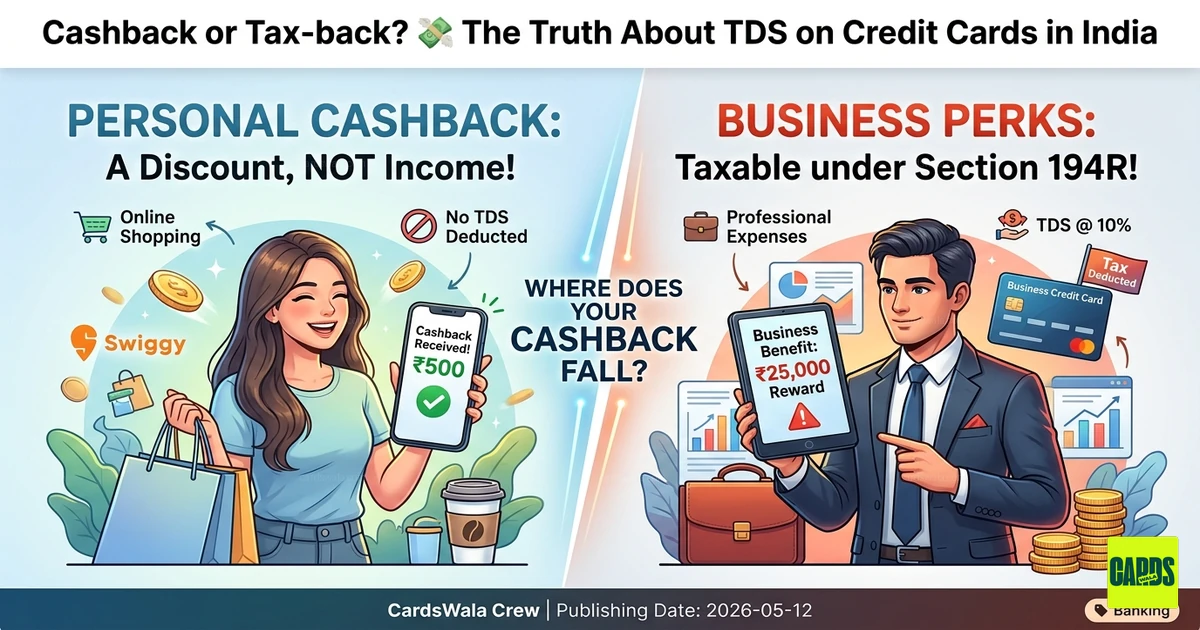
ಕ್ಯಾಶ್ಬ್ಯಾಕ್ ಅಥವಾ ಟ್ಯಾಕ್ಸ್-ಬ್ಯಾಕ್? 💸 ಭಾರತದಲ್ಲಿ ಕ್ರೆಡಿಟ್ ಕಾರ್ಡ್ಗಳ ಮೇಲೆ TDS ಬಗ್ಗೆ ಸತ್ಯ
ನಾವೆಲ್ಲರೂ ಅಲ್ಲಿದ್ದೇವೆ - ನೋಟಿಫಿಕೇಶನ್ ಪಿಂಗ್ 🔔 ಆಗುತ್ತದೆ, ಮತ್ತು ನೀವು ವೀಕೆಂಡ್ ಖರ್ಚಿಗೆ ₹500 ಕ್ಯಾಶ್ಬ್ಯಾಕ್ ಗಳಿಸಿದ್ದೀರಿ. ಇದು "ಉಚಿತ ಹಣ"ದಂತೆ ಅನಿಸುತ್ತದೆ. ಆದರೆ ಭಾರತೀಯ ತೆರಿಗೆಯ ಜಗತ್ತಿನಲ್ಲಿ, ನಿಯಮ ಪುಸ್ತಕವಿಲ್ಲದೆ ಯಾವುದೂ ನಿಜವಾಗಿಯೂ ಉಚಿತವಲ್ಲ.
ಆದಾಯ ತೆರಿಗೆ ಕಾಯ್ದೆ ಅಪ್ಡೇಟ್ಗಳು 2026-27 ಮೌಲ್ಯಮಾಪನ ವರ್ಷಕ್ಕೆ ಪೂರ್ಣ ಪ್ರಮಾಣದಲ್ಲಿ ನಡೆಯುತ್ತಿರುವುದರಿಂದ, ಅನೇಕ ಕಾರ್ಡ್ದಾರರು ಕೇಳುತ್ತಿದ್ದಾರೆ: ತೆರಿಗೆ ಇಲಾಖೆಯು ನನ್ನ ರಿವಾರ್ಡ್ಗಳಲ್ಲಿ ಪಾಲು ತೆಗೆದುಕೊಳ್ಳುತ್ತಿದೆಯೇ? ಕ್ಯಾಶ್ಬ್ಯಾಕ್ ವಾಸ್ತವವಾಗಿ ಕಾನೂನಿನ ದೃಷ್ಟಿಯಲ್ಲಿ "ಆದಾಯ"ವೇ ಎಂಬುದರ ಕುರಿತು ಪ್ರಸ್ತುತ ನಿಯಮಗಳನ್ನು ವಿಭಜಿಸೋಣ.
1. ಸಾಮಾನ್ಯ ನಿಯಮ: ಕ್ಯಾಶ್ಬ್ಯಾಕ್ "ರಿಯಾಯಿತಿ," "ಆದಾಯ"ವಲ್ಲ 🛍️
ಭಾರತೀಯ ಬಳಕೆದಾರರ ಬಹುಪಾಲು ಜನರಿಗೆ, ಕ್ರೆಡಿಟ್ ಕಾರ್ಡ್ ಕ್ಯಾಶ್ಬ್ಯಾಕ್ ಮೇಲೆ ಯಾವುದೇ TDS ಇಲ್ಲ.
ಆದಾಯ ತೆರಿಗೆ ಇಲಾಖೆಯು ಸಾಮಾನ್ಯವಾಗಿ ಕ್ಯಾಶ್ಬ್ಯಾಕ್ ಅನ್ನು ರಿಯಾಯಿತಿ ಅಥವಾ ಬೆಲೆ ಕಡಿತ ಎಂದು ನೋಡುತ್ತದೆ. ನೀವು ₹50,000 ಗೆ ಸ್ಮಾರ್ಟ್ಫೋನ್ ಖರೀದಿಸಿ ₹2,000 ಕ್ಯಾಶ್ಬ್ಯಾಕ್ ಪಡೆದರೆ, ಕಾನೂನು ನೀವು ಫೋನ್ ಅನ್ನು ₹48,000 ಗೆ ಖರೀದಿಸಿದ್ದೀರಿ ಎಂದು ನೋಡುತ್ತದೆ.
- ತೆರಿಗೆ ಪರಿಣಾಮ: ಇದು ನಿಮ್ಮ ವೈಯಕ್ತಿಕ ವೆಚ್ಚದಲ್ಲಿ ಕಡಿತವಾಗಿರುವುದರಿಂದ, ಅದನ್ನು "ಆದಾಯ" ಎಂದು ಪರಿಗಣಿಸಲಾಗುವುದಿಲ್ಲ.
- TDS ಅನ್ವಯಿಸುವಿಕೆ: ವೈಯಕ್ತಿಕ ಬಳಕೆದಾರರಿಗೆ ಪ್ರಮಾಣಿತ ವಹಿವಾಟು-ಆಧಾರಿತ ಕ್ಯಾಶ್ಬ್ಯಾಕ್ ಮೇಲೆ ಬ್ಯಾಂಕ್ಗಳು TDS ಅನ್ನು ಕಡಿತಗೊಳಿಸುವುದಿಲ್ಲ.
2. ರೆಡ್ ಫ್ಲ್ಯಾಗ್ಗಳು ಏಳುವಾಗ: ಸೆಕ್ಷನ್ 194R 🚩
ನೀವು ವ್ಯಾಪಾರ ಮಾಲೀಕರು ಅಥವಾ ವೃತ್ತಿಪರರಾಗಿದ್ದರೆ ಆಟವು ಬದಲಾಗುತ್ತದೆ. ಸೆಕ್ಷನ್ 194R ಅಡಿಯಲ್ಲಿ, ವ್ಯಾಪಾರ ಅಥವಾ ವೃತ್ತಿಯಿಂದ ಉದ್ಭವಿಸುವ ಯಾವುದೇ "ಪ್ರಯೋಜನ ಅಥವಾ ಪರ್ಕ್ವಿಸಿಟ್" ಮೌಲ್ಯವು ಹಣಕಾಸಿನ ವರ್ಷದಲ್ಲಿ ₹20,000 ಮೀರಿದರೆ 10% TDS ಗೆ ಒಳಪಟ್ಟಿರುತ್ತದೆ.
ಕ್ಯಾಚ್: ನೀವು ವೃತ್ತಿಪರ ಖರ್ಚುಗಳಿಗೆ ಬಿಸಿನೆಸ್ ಕ್ರೆಡಿಟ್ ಕಾರ್ಡ್ ಬಳಸಿ ಬೃಹತ್ ಕ್ಯಾಶ್ಬ್ಯಾಕ್, ಐಷಾರಾಮಿ ರಿವಾರ್ಡ್ಗಳು ಅಥವಾ ಹೆಚ್ಚಿನ-ಮೌಲ್ಯದ ಗ್ಯಾಜೆಟ್ಗಳನ್ನು ಸ್ವೀಕರಿಸಿದರೆ, ಬ್ಯಾಂಕ್ ಇದನ್ನು ವ್ಯಾಪಾರ ಪ್ರಯೋಜನ ಎಂದು ವರ್ಗೀಕರಿಸಬಹುದು. ಅಂತಹ ಸಂದರ್ಭಗಳಲ್ಲಿ, TDS ಅನ್ನು ಕಡಿತಗೊಳಿಸಬಹುದು.
3. "ಉಡುಗೊರೆ" ಬಲೆ: ಸೆಕ್ಷನ್ 56(2)(x) 🎁
ನಿಮ್ಮ ಕ್ಯಾಶ್ಬ್ಯಾಕ್ ನಿರ್ದಿಷ್ಟ ಖರೀದಿಗೆ ಲಿಂಕ್ ಆಗಿಲ್ಲದಿದ್ದರೆ - "ರೆಫರ್-ಎ-ಫ್ರೆಂಡ್" ಬೋನಸ್ ಅಥವಾ ಸೈನ್-ಅಪ್ ಪ್ರೋತ್ಸಾಹದಂತೆ - ಅದನ್ನು ಉಡುಗೊರೆ ಎಂದು ವರ್ಗೀಕರಿಸಬಹುದು.
- ಮಿತಿ: ಸಂಬಂಧಿಕರಲ್ಲದವರಿಂದ "ಉಡುಗೊರೆಗಳ" (ರेफರಲ್ ಕ್ಯಾಶ್ಬ್ಯಾಕ್ ಸೇರಿದಂತೆ) ಒಟ್ಟು ಮೌಲ್ಯವು ವರ್ಷದಲ್ಲಿ ₹50,000 ಮೀರಿದರೆ, ಸಂಪೂರ್ಣ ಮೊತ್ತವು ತೆರಿಗೆಗೆ ಒಳಪಡುತ್ತದೆ.
- ವರದಿ ಮಾಡುವುದು: ಬ್ಯಾಂಕ್ಗಳು ಸಣ್ಣ ರೆಫರಲ್ ಬೋನಸ್ಗಳ ಮೇಲೆ ವಿರಳವಾಗಿ TDS ಅನ್ನು ಕಡಿತಗೊಳಿಸಿದರೂ, ನಿಮ್ಮ ITR ಅನ್ನು ಸಲ್ಲಿಸುವಾಗ ನೀವು ಅವುಗಳನ್ನು "ಇತರ ಮೂಲಗಳಿಂದ ಆದಾಯ" ಅಡಿಯಲ್ಲಿ ಘೋಷಿಸಲು ಕಾನೂನುಬದ್ಧವಾಗಿ ಅಗತ್ಯವಿದೆ.
ತ್ವರಿತ ಹೋಲಿಕೆ: ರಿವಾರ್ಡ್ಗಳು vs ವಾಸ್ತವ 📊
| ರಿವಾರ್ಡ್ ಪ್ರಕಾರ | TDS ಕಡಿತಗೊಳಿಸಲಾಗಿದೆಯೇ? | ಅದು ತೆರಿಗೆಗೆ ಒಳಪಡುತ್ತದೆಯೇ? |
|---|---|---|
| ಆನ್ಲೈನ್ ಶಾಪಿಂಗ್ ಕ್ಯಾಶ್ಬ್ಯಾಕ್ 🛒 | ಇಲ್ಲ | ಇಲ್ಲ (ಇದು ರಿಯಾಯಿತಿ) |
| ರಿವಾರ್ಡ್ ಪಾಯಿಂಟ್ಗಳು/ಏರ್ ಮೈಲ್ಸ್ ✈️ | ಇಲ್ಲ | ಸಾಮಾನ್ಯವಾಗಿ ಇಲ್ಲ |
| ರೆಫರಲ್ ಬೋನಸ್ 🤝 | ಇಲ್ಲ | ಹೌದು (ಒಟ್ಟು ಉಡುಗೊರೆಗಳು ವರ್ಷಕ್ಕೆ ₹50k ಮೀರಿದರೆ) |
| ಬಿಸಿನೆಸ್ ಕಾರ್ಡ್ ಪರ್ಕ್ಗಳು 💼 | ಹೌದು | ಸೆಕ್ಷನ್ 194R ಅಡಿಯಲ್ಲಿ ₹20k ಮೀರಿದರೆ |
"ಮ್ಯಾನುಫ್ಯಾಕ್ಚರ್ಡ್ ಸ್ಪೆಂಡಿಂಗ್" ಬಗ್ಗೆ ಎಚ್ಚರದಿಂದಿರಿ ⚠️
2026 ರಲ್ಲಿ, ಆದಾಯ ತೆರಿಗೆ ಇಲಾಖೆಯ AI ವ್ಯವಸ್ಥೆಗಳು ಎಂದಿಗಿಂತಲೂ ಹೆಚ್ಚು ಮುಂದುವರಿದಿವೆ. ನೀವು ಹಣವನ್ನು "ಸೈಕ್ಲಿಂಗ್" ಮಾಡುತ್ತಿದ್ದರೆ (ಉದಾ., ರಿವಾರ್ಡ್ಗಳನ್ನು ಗಳಿಸಲು ಬಾಡಿಗೆ ಪ್ಲಾಟ್ಫಾರ್ಮ್ನಲ್ಲಿ ಕ್ರೆಡಿಟ್ ಕಾರ್ಡ್ ಮೂಲಕ ಸ್ನೇಹಿತರಿಗೆ ಪಾವತಿಸುವುದು), ಮತ್ತು ನಿಮ್ಮ ಕ್ರೆಡಿಟ್ ಕಾರ್ಡ್ ಖರ್ಚುಗಳು ನಿಮ್ಮ ಘೋಷಿತ ಆದಾಯಕ್ಕೆ ಅಸಮಾನವಾಗಿದ್ದರೆ, ನೀವು ವಾರ್ಷಿಕ ಮಾಹಿತಿ ಹೇಳಿಕೆ (AIS) ಮೂಲಕ ಸ್ವಯಂಚಾಲಿತ ಪರಿಶೀಲನಾ ನೋಟಿಸ್ ಅನ್ನು ಪ್ರಚೋದಿಸಬಹುದು.
ಸುವರ್ಣ ನಿಯಮ: ಅನಗತ್ಯ ತೆರಿಗೆ ತೊಡಕುಗಳನ್ನು ತಪ್ಪಿಸಲು ನಿಮ್ಮ ವೈಯಕ್ತಿಕ ಮತ್ತು ವ್ಯಾಪಾರ ಖರ್ಚುಗಳನ್ನು ಪ್ರತ್ಯೇಕವಾಗಿರಿಸಿ.
ಅಂತಿಮ ತೀರ್ಪು 🧐
ಕ್ಯಾಶುಯಲ್ ಶಾಪರ್ಗೆ, ನಿಮ್ಮ ₹50 ಸ್ವಿಗ್ಗಿ ಕ್ಯಾಶ್ಬ್ಯಾಕ್ ಸುರಕ್ಷಿತವಾಗಿದೆ. ನೀವು ಅದನ್ನು ವರದಿ ಮಾಡಬೇಕಾಗಿಲ್ಲ, ಮತ್ತು ಯಾವುದೇ TDS ಅನ್ನು ಕತ್ತರಿಸಲಾಗುವುದಿಲ್ಲ. ಆದಾಗ್ಯೂ, ನೀವು ವ್ಯಾಪಾರ ಖರ್ಚುಗಳ ಮೂಲಕ ಲಕ್ಷಾಂತರ ರಿವಾರ್ಡ್ಗಳನ್ನು ಸಂಗ್ರಹಿಸುವ "ಪವರ್ ಬಳಕೆದಾರರಾಗಿದ್ದರೆ", ನಿಮ್ಮ ಫಾರ್ಮ್ 26AS ಅನ್ನು ಪರಿಶೀಲಿಸುವ ಮತ್ತು ತೆರಿಗೆ ವೃತ್ತಿಪರರನ್ನು ಸಂಪರ್ಕಿಸುವ ಸಮಯ.
*ಹಕ್ಕು ನಿರಾಕರಣೆ: ತೆರಿಗೆ ಕಾನೂನುಗಳು ಬದಲಾವಣೆಗೆ ಒಳಪಟ್ಟಿರುತ್ತವೆ. ಯಾವಾಗಲೂ CBDT ಯಿಂದ ಇತ್ತೀಚಿನ ಸುತ್ತೋಲೆಗಳನ್ನು ನೋಡಿ ಅಥವಾ ನಿರ್ದಿಷ್ಟ ಸಲಹೆಗಾಗಿ ಚಾರ್ಟರ್ಡ್ ಅಕೌಂಟೆಂಟ್ ಅನ್ನು ಸಂಪರ್ಕಿಸಿ.
ಈ ಕಾರ್ಡ್ಗಳನ್ನು ನೋಡಿ
CardsWala Crew
ಕ್ರೆಡಿಟ್ ಕಾರ್ಡ್ ತಜ್ಞ ಮತ್ತು ಹಣಕಾಸು ಬರಹಗಾರ