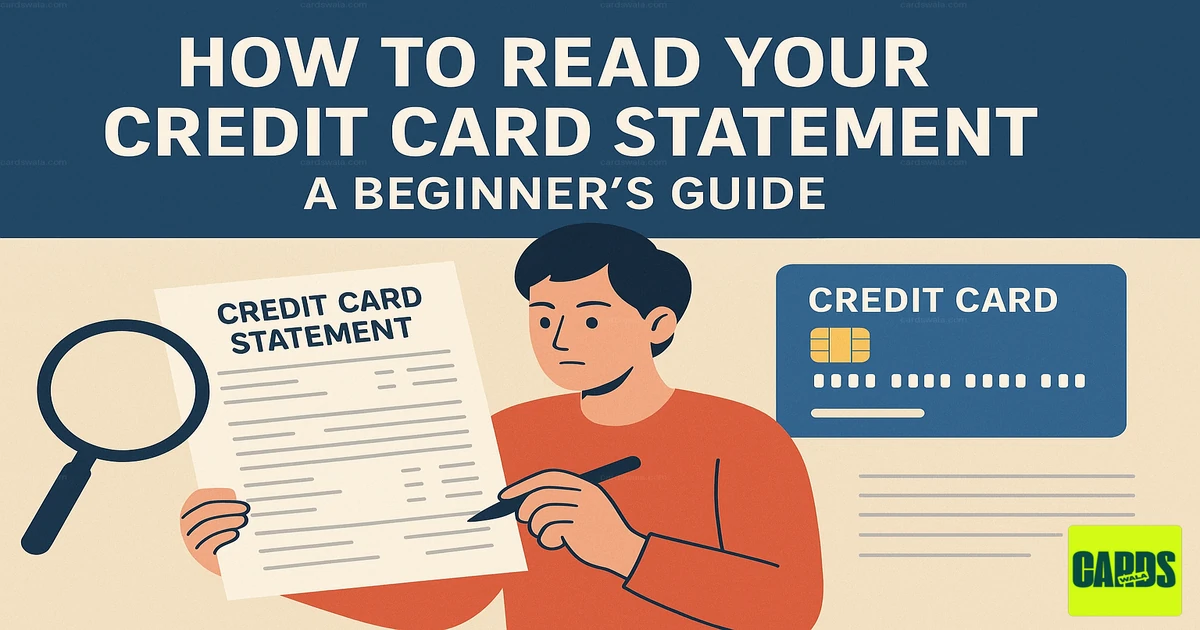
How to Read Your Credit Card Statement: A Beginner's Guide
Receiving your credit card statement each month can sometimes feel like opening a coded message. You see numbers, dates, and terms that might seem intimidating at first glance. But here’s the good news: understanding your credit card statement is not rocket science! In fact, it's one of the most crucial steps towards becoming a financially savvy individual in India.
Think of your credit card statement as your personal financial report card for the month. It tells you exactly where your money went, what you owe, and when you need to pay it. Learning to read it effectively empowers you to spot errors, prevent fraud, manage your budget, and ultimately, build a strong credit history.
Let's demystify this essential document together, section by section.
Decoding Your Credit Card Statement: A Section-by-Section Guide
While the exact layout might vary slightly from bank to bank (HDFC, SBI, ICICI, etc.), most Indian credit card statements follow a similar structure. Imagine you have your statement in front of you. Here's what you'll typically find:
1. The Account Summary: Your Financial Snapshot
This is usually at the top and provides a quick overview of your credit card account for the billing cycle.
- Previous Balance: The amount you owed at the end of the last billing cycle.
- Payments/Credits: Any payments you made or refunds you received since the last statement.
- New Purchases/Debits: All your new spending, cash advances, and fees charged during the current billing cycle.
- Interest Charges: If applicable, this shows the interest levied on your outstanding balance.
- Total Amount Due (Current Outstanding): The grand total you owe for the current statement period.
- Statement Date: The date your statement was generated.
This section gives you a bird's-eye view of your financial activity and is vital for understanding your current obligation.
2. Payment Information: What You Owe & When
Crucially important, this section tells you exactly how much to pay and by when.
- Total Amount Due: The full outstanding balance that you should ideally pay to avoid interest charges.
- Minimum Amount Due: The smallest amount you must pay by the due date to keep your account in good standing and avoid late payment fees. Warning: Paying only the minimum means you'll incur hefty interest on the remaining balance!
- Payment Due Date: The deadline by which your payment (at least the Minimum Amount Due) must reach the bank. Missing this date invites late payment fees and negatively impacts your credit score.
Always aim to pay the Total Amount Due by the Payment Due Date to fully leverage your interest-free period.
3. Transaction Details: The Nitty-Gritty of Your Spending
This is where you'll find a detailed chronological list of all activities on your card during the billing cycle.
- Transaction Date: The actual date the transaction occurred.
- Posting Date: The date the transaction was processed and added to your account by the bank (may differ slightly from transaction date).
- Description: The merchant's name (e.g., "Amazon India", "Reliance Fresh", "Swiggy").
- Amount: The cost of the transaction.
- Type of Transaction: Whether it was a purchase, a cash advance, an EMI conversion, a payment, or a refund.
Reviewing this section carefully helps you track your spending, verify all charges, and quickly spot any unauthorized transactions.
4. Rewards Summary: Cashing In on Your Spends
Many credit cards offer reward points, cashback, or air miles. This section provides an update on your rewards.
- Previous Reward Points: Your reward points balance from the last statement.
- Points Earned This Cycle: How many new points you accumulated from your purchases.
- Points Redeemed: If you used any points during the cycle.
- Current Reward Points Balance: Your total available points for redemption.
Don't let your hard-earned rewards expire! Keep an eye on this section and redeem them periodically for savings or perks.
Essential Credit Card Jargon, Demystified
Understanding these key terms is fundamental to mastering your credit card finances:
| Term | Explanation |
|---|---|
| Statement Date | The last day of your billing cycle. All transactions up to this date are included in the current statement. Your next statement will begin from the day after this date. |
| Payment Due Date | The deadline by which your payment (at least the Minimum Amount Due) must be received by the bank to avoid late payment fees and interest charges. It's usually 15-20 days after the Statement Date. |
| Minimum Amount Due | The smallest amount you are legally required to pay by the Payment Due Date. Paying only this amount will incur interest charges on the remaining balance and can significantly increase your debt over time. |
| Total Amount Due | The entire outstanding balance on your card, including all new purchases, cash advances, fees, and any unpaid balance from previous cycles. Paying this amount ensures you avoid all interest charges. |
| Credit Limit | The maximum amount of credit your bank has extended to you. You cannot spend beyond this limit. |
| Available Credit | The amount of credit you still have left to spend. It's calculated as Credit Limit - (Total Amount Due - Payments Made). Keep an eye on this to avoid exceeding your limit. |
Understanding Interest: Why Paying in Full is Your Best Bet
Credit cards in India come with a grace period, often referred to as the "interest-free period," which typically ranges from 20 to 50 days. This period applies to new purchases only if you pay your entire previous bill's outstanding balance by its due date.
How Interest is Calculated:
If you fail to pay the Total Amount Due by the Payment Due Date, the bank will levy interest charges. This interest is not just on the unpaid portion but often on the entire outstanding balance from the date of each transaction, retrospectively! Credit card interest rates (Annual Percentage Rate or APR) in India are notoriously high, often ranging from 30% to 45% per annum.
For example, if you have a Total Amount Due of ₹10,000 and only pay the Minimum Amount Due of ₹500, the bank will charge interest on the remaining ₹9,500 (and any new purchases) from their respective transaction dates. This can quickly snowball, turning a small outstanding amount into a significant debt.
The Golden Rule: Always strive to pay the Total Amount Due by the Payment Due Date to avoid all interest charges and make the most of your credit card's interest-free period.
Your Monthly Credit Card Statement Checklist: Stay Smart, Stay Safe
Make reviewing your credit card statement a monthly habit. Here’s a quick checklist to follow:
- Check for Fraudulent Transactions: Carefully scan every transaction description. Do you recognize all the purchases? If you spot anything suspicious, report it to your bank immediately.
- Verify All Charges: Match the transactions on your statement with your own records (receipts, spending tracker apps). Ensure all amounts are correct.
- Confirm Payments Made: Check that any payments you made during the cycle are accurately reflected as credits.
- Review Fees and Charges: Look for any annual fees, late payment fees, cash advance fees, or other charges. Understand why they were applied.
- Monitor Your Rewards: See how many points or cashback you earned and plan for future redemptions.
- Note Your Payment Due Date: Mark it on your calendar, set a reminder, or better yet, set up auto-pay for the Total Amount Due to ensure you never miss it.
- Assess Your Spending: Use the transaction details to understand your spending patterns. Are you sticking to your budget? Are there areas where you can cut back?
Final Thoughts
Reading your credit card statement isn't just about paying your bill; it's about taking control of your financial health. By regularly reviewing this document, you gain transparency into your spending, protect yourself from fraud, avoid unnecessary interest, and build a strong financial foundation.
Embrace your credit card statement as a powerful tool. It's your guide to responsible credit usage, helping you unlock benefits while avoiding pitfalls. So, the next time your statement arrives, approach it with confidence - you now have all the knowledge to understand it thoroughly! Happy smart spending!
Check Out These Cards

CardsWala Crew
Credit Card Expert & Financial Writer